
But digital signage isn't valuable just because it uses a screen. Its true power emerges when it helps patients discover products, understand their lens options, navigate your dispensary, or act on a timely message. A screen without a strategy is just noise.
This article breaks down the practical benefits, limitations, and key performance measures for digital signage in a retail environment. We’ll offer specific insights for optical practices and eyecare dispensaries looking to create a more modern and effective patient experience.
Key Takeaways
- Digital signage gives you a flexible way to promote products, educate shoppers, and update messaging without constantly reprinting materials.
- In an optical dispensary, well-placed screens can support frame discovery, explain complex lens features, and create a welcoming transition from a clinical exam to retail browsing.
- The best results come from combining useful content with smart screen placement, readable design, and clear ownership of the update process.
- Success depends on a coordinated plan that integrates screens with your practice layout, fixtures, and lighting—not just on the hardware itself.
What Is Digital Signage in Retail?
In practical terms, retail digital signage refers to any digital screen, display, kiosk, or video wall used to present scheduled or responsive content to shoppers. Retailers use it as a deliberate communication channel, not a looping video alone.
Common applications in retail include:
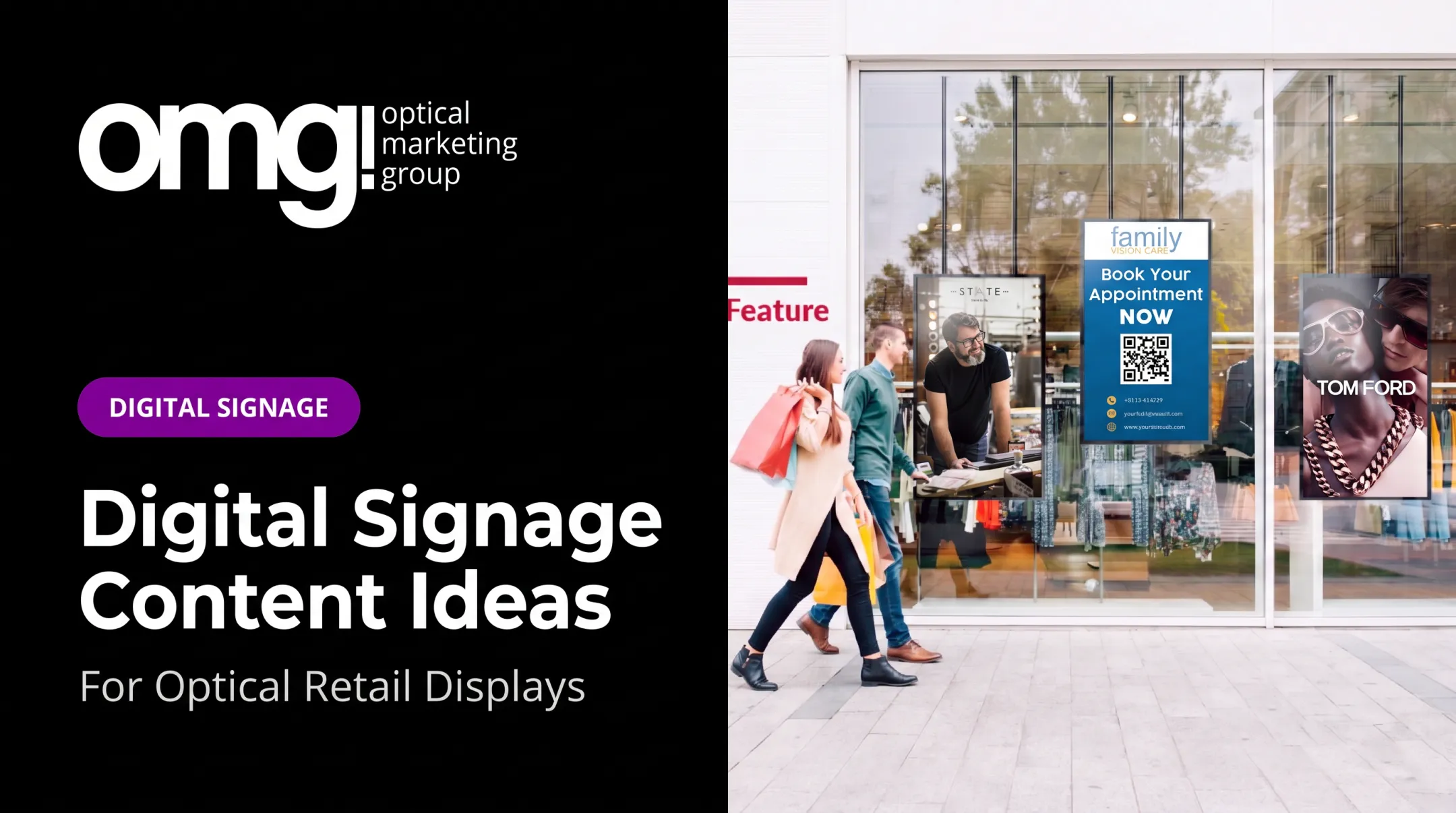
- Window Displays: High-brightness screens that attract passersby with promotions and brand stories.
- Product Education: Interactive tablets or displays placed near merchandise to explain features and benefits.
- Promotional Messaging: Timely announcements for sales, new arrivals, or seasonal campaigns.
- Wayfinding: Guiding customers to different departments, exam rooms, or service desks.
- Digital Catalogs: Allowing shoppers to browse products that may not be physically on the floor.
In an optical practice, these tools translate directly. You can use screens to showcase new frame collections, demonstrate lens coating differences, or run a sunglasses promotion.
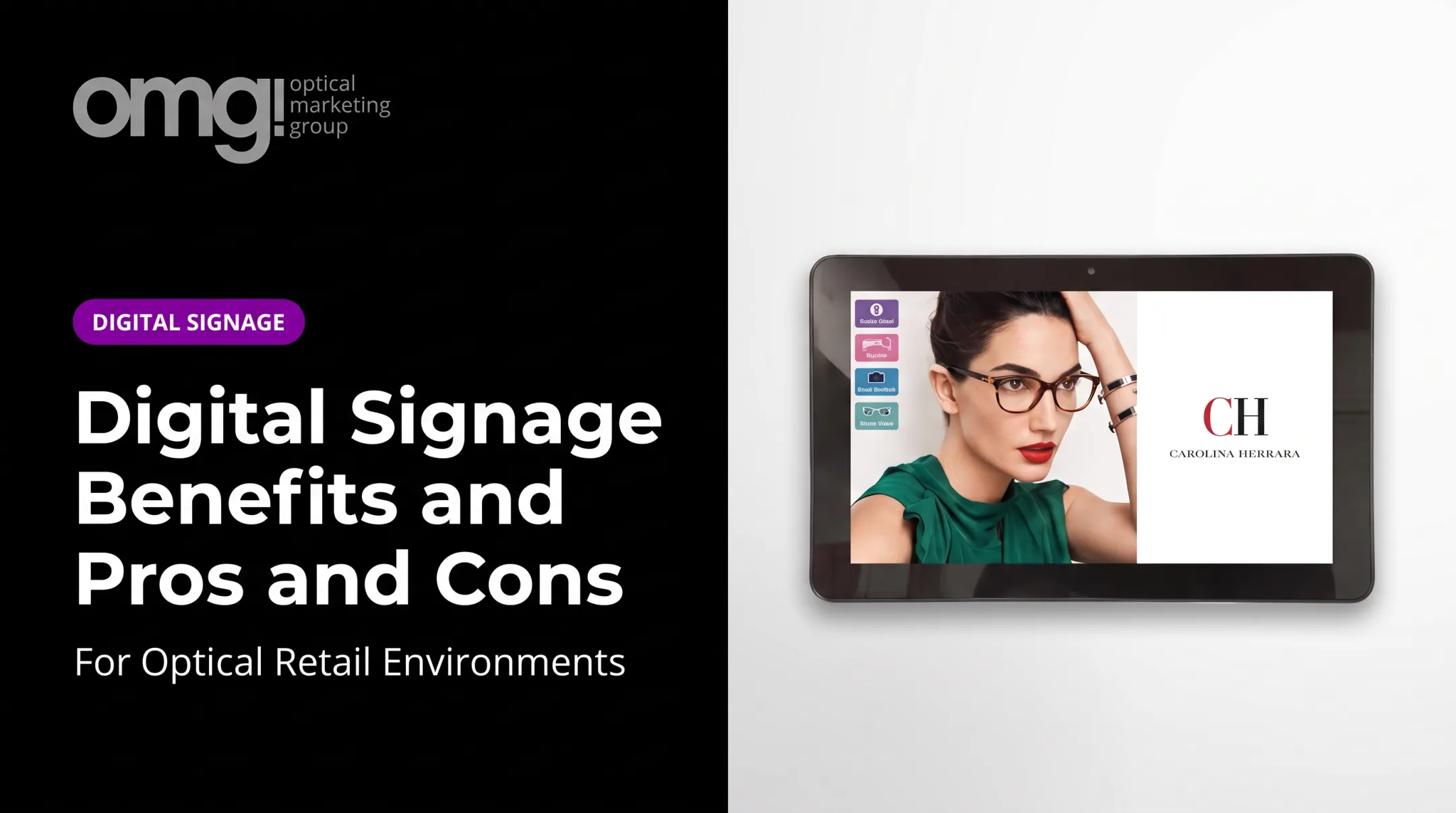
For example, a Medium Retail Ready Tablet can sit in a frame display so patients can watch brand videos or try a Face Shape Guide. A larger 43" Freestanding Interactive Touch Display can anchor education and brand storytelling on the floor.
Ultimately, a screen is only one part of the solution. To be effective, the display must work in harmony with your store layout, fixtures, lighting, and overall customer journey.
Key Advantages of Digital Signage in Retail
The most important advantages of digital signage are tied to outcomes you can actually observe and measure. These include better patient engagement, new sales opportunities, and a more consistent brand identity.
Increased Engagement and Product Discovery
A well-placed screen can capture attention in a way static posters often can't. Motion, bright visuals, and relevant content draw the eye, encouraging patients to explore products they might have otherwise missed. According to Zebra's Global Shopper Study, 72% of shoppers want more personalized in-store ads. That demand points to relevant, dynamic content over static posters.
In an optical setting, screens can bridge the gap between clinical care and retail discovery. Concise visuals can introduce patients to premium lens options, specialty eyewear, or contact lens services before they even speak with an optician.
That pre-education makes the conversation more efficient. Interactive tools, like a photo booth feature on a tablet, let patients try on frames and share looks with family, which makes selection more engaging.
KPIs to monitor:
- Dwell time near promoted displays
- Inquiries about specific products or services shown on screen
- QR code scans for more information or special offers
- Optical capture rates for patients coming from an exam
- Conversion from browsing to purchase
More Timely and Persuasive Communication
One of the biggest operational benefits of digital signage is agility. Instead of designing, printing, and installing new posters for every campaign, you can schedule content to change automatically. That means you can run promotions, launch new products, or share seasonal health messages with a few clicks.
A large-scale optical group, FYidoctors, uses a centralized system to instantly update playlists across more than 480 screens in 350 clinics.
This flexibility supports key sales conversations. For instance, you can run content that explains the benefits of a second pair of glasses (for computer use, sports, or sun protection) right at the dispensing table. That messaging can influence purchase intent at the point of decision.
A 2026 retail study analyzing 30 million shoppers found that digital signage increased the purchase likelihood of a featured product by an average of 8.1%. The setting was a supermarket, yet it still shows the power of well-timed digital messages.

Stronger Brand Presentation and More Consistent Experiences
Digital signage helps you create a cohesive brand story that flows from the storefront window to the reception area and throughout the dispensary. You can reinforce your practice's unique identity while still tailoring messages for specific campaigns or locations.
However, the presentation is critical. The content must feel premium and readable, not disruptive. Success depends on physical factors like:
- Screen Placement: Is it at a comfortable viewing height and angle?
- Viewing Distance: Is text large and clear enough to be read from where patients stand or sit?
- Lighting and Glare: Does ambient light or sunlight wash out the screen? High-brightness window displays and non-glare screens are designed to solve this.
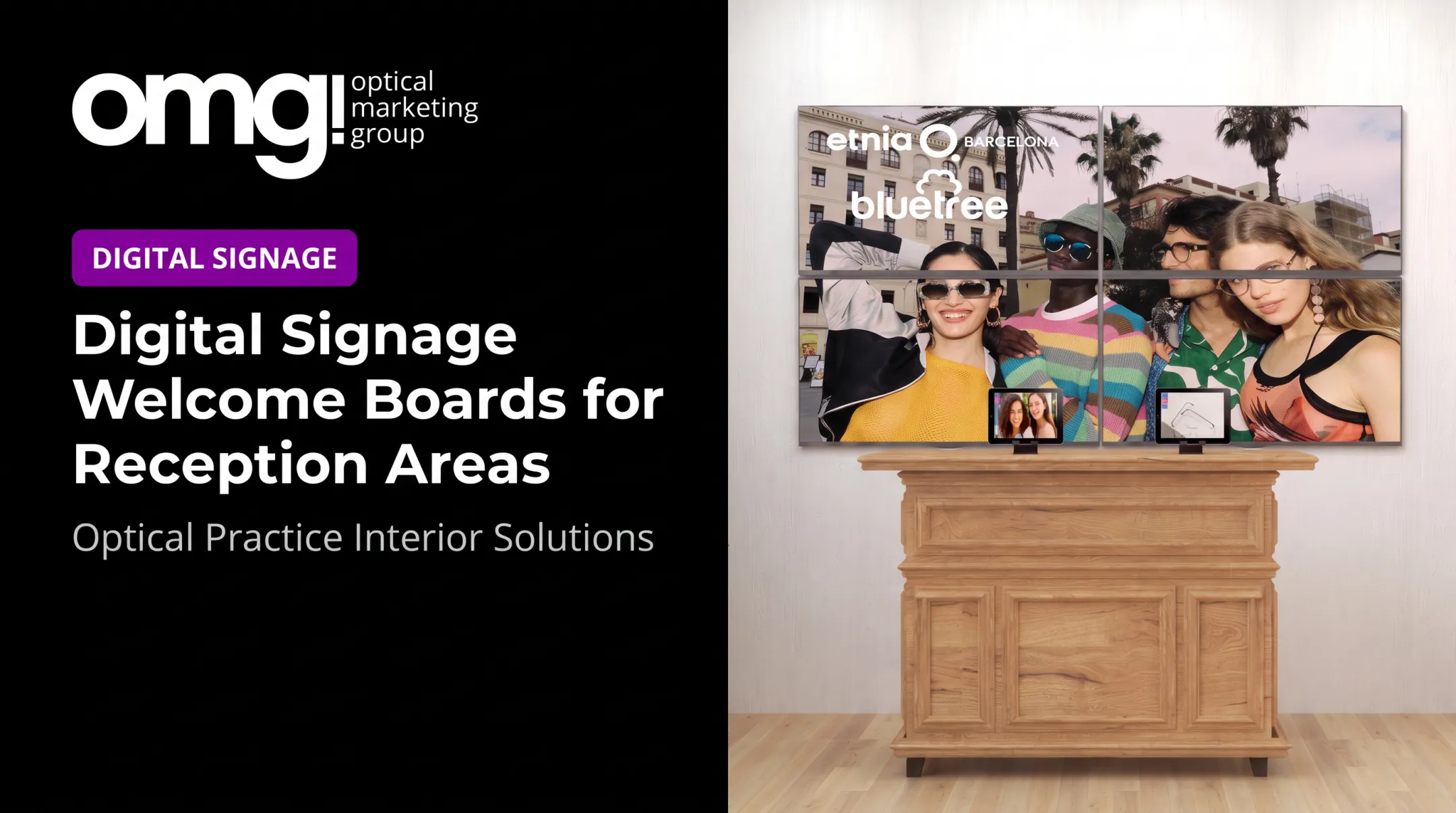
Digital signage works best when it's part of a complete optical merchandising system. At OMG!, we integrate digital displays directly into our practice layouts and custom fixtures. This ensures the technology enhances the environment rather than competing with it, creating a seamless and professional experience.
What Happens When Digital Signage Is Missing or Ignored
Relying solely on static or outdated communication creates missed opportunities. Stale promotions make a practice feel dated, inconsistent messaging confuses patients, and staff get bogged down answering the same basic questions about products or insurance. Without dynamic tools, it’s harder to tell brand stories, explain complex products, and guide patients toward the best solutions for them.

But simply adding screens without a plan can cause the same, or even worse, problems. Common pitfalls include:
- Irrelevant content, such as looping video that ignores patient needs
- Visual clutter from too many screens or competing messages
- Poor readability when text is too small, low-contrast, or too fast
- Maintenance issues like blank or frozen screens that look unprofessional
Digital signage is not a fix-all. It cannot fix a poor layout, bad lighting, or unappealing fixtures. It's a powerful tool, but it should be seen as one component of a broader retail design strategy, not a substitute for getting the fundamentals right.
How to Get the Most Value from Digital Signage
A successful digital signage strategy is built on clear goals, deliberate placement, and a solid operational plan.
Begin with a Specific Goal
Before buying any hardware, define the primary objective for each screen. Are you trying to…
- Attract more walk-in traffic from the street?
- Educate patients on the benefits of anti-reflective coatings?
- Improve wayfinding to reduce confusion?
- Promote a specific frame collection?
- Support multiple-pair sales conversations?
Each goal requires a different approach to content and placement. A screen in your window needs a bold, simple message, while a tablet at a dispensing desk can offer more detailed, interactive information.
Choose Placement and Content Deliberately
Match your content to the viewer’s location and mindset.
- Windows & Entrances: Use brief, high-impact visuals to grab attention and communicate your brand identity.
- Waiting Areas: Offer quieter brand stories, patient testimonials, or educational content that people can absorb while they wait.
- Dispensary & Product Displays: Place screens near relevant products to provide detailed information, show available options, and support opticians' recommendations.
Readability is non-negotiable. Follow accessibility guidelines for text contrast (a ratio of at least 4.5:1 is a good standard) and ensure text is large enough for the viewing distance. Avoid excessive text or rapid, distracting movements, especially in calmer areas of the practice.
Build an Operating and Measurement Plan
A screen with outdated content is worse than no screen at all. Assign clear ownership for creating and updating content, and set a realistic refresh schedule. Use playlists to schedule content based on the time of day, week, or season.

Establish a baseline before you launch, then track metrics like:
- Sales of promoted products
- Optical capture and multiple-pair sales rates
- Foot traffic and dwell time
- Questions from patients about topics covered on screen
- Savings from reduced printing costs
Align Screens with the Whole Practice Environment
Don't purchase hardware and then try to find a place for it. The most successful implementations assess the practice layout, patient flow, fixtures, lighting, and brand graphics together. The screens should feel like a natural part of the environment.
For practices that want to develop a coordinated strategy, tools like OMG!’s Patient Experience Assessment can help identify gaps and opportunities. It treats digital signage as one integrated component of your overall design. From there, our online Project Planner helps scope the details so screens, fixtures, and patient flow work as one system.
Conclusion
When used thoughtfully, digital signage can enhance the retail experience in an optical practice. It drives product discovery, enables more timely communication, and reinforces your brand identity. Screens also give you an agile way to educate patients and support your team's sales efforts.
But the greatest value appears when digital elements are combined with strong foundational merchandising: clear wayfinding, attractive fixtures, quality lighting, and helpful staff.
Instead of viewing it as a one-time hardware purchase, treat digital signage as an ongoing communication strategy. Start with a measurable goal, test your content, and refine the experience over time. That approach turns a simple screen into a lasting driver of patient engagement and sales.
Frequently Asked Questions
What are the benefits of digital signage?
The main benefits are increased patient engagement, the ability to make real-time updates to promotions, better product education, and stronger brand consistency. It can support sales conversations and reduce long-term costs associated with reprinting static signs.
What is digital signage in retail?
It is the use of digital screens, kiosks, or video walls in and around a retail store to inform, guide, or promote products to shoppers. In an optical setting, this includes window displays, interactive tablets at dispensing tables, and educational screens in waiting areas.
What is the typical cost of digital signage?
Costs vary widely based on screen size, software, installation, and content creation. Software can be affordable (a 2026 pricing guide shows plans starting around $8 per screen/month), but hardware, custom content, and installation represent larger upfront costs.
How does digital signage increase retail sales?
It can influence sales by making products more visible, supporting cross-sell opportunities (like a second pair), and promoting timely offers at key decision points. While it's not a guarantee, research shows it can increase the likelihood of shoppers purchasing a featured item.
Is digital signage better than traditional signage?
It depends on the goal. Digital offers flexibility and dynamic content for promotions, while static signage is simpler and more cost-effective for permanent information like practice names or room labels. A mix of both often works best.
How do retailers measure the ROI of digital signage?
ROI is measured by comparing results before and after launch. Key metrics include sales of promoted products, optical capture rate, average transaction value, foot traffic, dwell time, and savings from reduced printing and labor costs for manual updates.