
Introduction
A great Spring–Summer 2026 eyewear campaign does more than showcase new frames. It communicates a point of view, fits into how customers actually live each season, and makes a collection easy to find once they walk through the door.
That's a tall order for optical brands and practices. Fashion houses pour budgets into cinematic campaigns, and independent practices have to compete for the same attention while still handling fit, lens needs and professional guidance that a runway video never addresses.
This article covers the trend directions worth building a 2026 campaign around, five concrete campaign concepts, a planning framework, channel strategy and the in-store merchandising needed to turn creative attention into appointments and sales.
Key Takeaways
- Anchor every asset, from photography to signage, around one seasonal idea
- Choose trends based on your audience and business goal, not runway hype alone
- Pair style storytelling with fit, comfort, lens and UV guidance
- Track engagement and retail outcomes, including appointments and multi-pair sales
- Treat the collection as a system of touchpoints, not a single advertisement
2026 Eyewear Trends to Build Campaigns Around
Spring–Summer 2026 runways gave a fairly consistent signal: sunglasses are getting bigger, optical frames are getting thinner, and color is showing up in unexpected places.
Frame Directions Worth Translating
Several directions appear across multiple shows, which makes them more reliable for campaign planning than a single brand's statement piece:
- Oversized and wraparound shapes, seen at Balenciaga, Tory Burch and Saint Laurent
- Geometric construction, including hexagonal and squared wire rims from Issey Miyake, Mugler and Prada
- Retro flat-top aviators, paired with sporty detailing at Loewe, Khaite and Burberry
- Refined minimalism through skinny wire-rim metal frames
- Transparent and color acetate in candy tones, cherry red and sky blue
- Sculptural, mixed-material builds, like Chloe's layered contours and custom havana hues
These directions are confirmed on the runway, according to Harper's Bazaar's trend report. That's a different claim than proven retail demand, so treat it as creative inspiration, not a buying mandate.
Color, Lenses and Function
Color should do more than decorate a frame. Tinted lenses, ranging from pale pink to fuchsia, give a campaign a built-in photography palette that can extend into typography, window graphics and digital signage.
Style still has to answer to function. UV400 labeling or a "100% UV protection" claim indicates lenses blocking more than 99% of UVA and UVB rays, per FDA's sun-safety guidance. Lens darkness alone says nothing about UV blocking, which is a useful line for staff conversations and campaign copy alike.
Matching Trends to Customer Groups
Not every trend serves every customer. A quick filter:
- Gen Z shoppers: bold color, geometric shapes, short-form video styling
- Professionals: refined minimalism, modern classics with updated materials
- Families: comfort, durability, lifestyle lenses
- Fashion-conscious patients: oversized and sculptural statement pieces
- Sunglass buyers: wraparound coverage, tinted lenses, UV messaging
- Everyday frame seekers: versatile wire rims and classic silhouettes updated subtly
Turn each selected trend into a full "trend translation": a campaign message, a visual treatment, a product grouping, a staff talking point and a physical display. A trend that only lives in a photo never reaches the dispensary floor.

Campaign Concepts for Spring–Summer 2026
Five concepts translate 2026 trend signals into something a practice or brand can actually produce.
New Perspective
Promise: eyewear as a shift in how you see yourself, not just how you see.
- Target: fashion-curious patients across prescription and sun
- Visuals: before/after framing, mirrored transitions
- Featured group: oversized and sculptural frames
- CTA: book a styling consultation
Sun-Ready Lifestyle
Built around travel, outdoor dining and coastal weekends. Keep messaging broad rather than assuming every customer surfs or jets off somewhere.
- Featured group: wraparound and shield sunglasses
- CTA: shop the sun edit, schedule a UV check
Color Outside the Lines
Bold frame colors against contrasting backgrounds, color-blocked in-store displays and short clips of frames catching light.
- Featured group: transparent and candy-acetate frames
- Slogan territory: confidence, play, self-expression
Modern Classics
For customers who want relevance without drama. Enduring silhouettes get updates in new materials or lens finishes.
- Featured group: refined wire-rim and aviator updates
- CTA: "the shapes you know, reworked."
Frames for Every Version of You
A multiple-identity narrative works well here. Zenni's "Frames of You" campaign built personas like The Daydreamer, The Realist and The Maverick around distinct frame aesthetics, according to Zenni's campaign blog.
Adapt the idea for work, travel, social and everyday categories.
- Featured group: a curated mix spanning the whole collection
- CTA: find your frame, find your version
Each concept needs a clear in-store counterpart. A digital campaign about "new perspective" falls flat if the dispensary floor still looks the way it did last spring.
How to Plan a Campaign That Converts Attention Into Visits and Sales
Start With the Objective
Before choosing a concept, decide what the campaign needs to accomplish:
- Launch a new seasonal collection
- Increase sunglass interest ahead of summer
- Reintroduce an underbrowsed category
- Generate eye-exam appointments
- Encourage multiple-pair purchases
- Refresh an outdated optical identity
This matters because opticians report that three pairs typically meet a patient's actual needs, yet only one in eight patients buy what they need, according to OMG!'s internal research. A campaign objective built around multi-pair education can move that number more than a trend alone ever will.
Define the Audience
Get specific: age range, lifestyle, frame preferences, price sensitivity, prescription needs, and the real reason someone walks in. "Eyewear enthusiasts" who browse often and buy multiple pairs deserve different messaging than a once-a-year patient renewing a prescription.
Build the Brief and Content System
A concise brief should cover seasonal insight, customer tension, tone, frame categories, visual references, timing, budget, and approval process. From there, build a content system:
- Hero photography or video
- Product images and short social clips
- Email and landing-page copy
- Staff talking points
- Window graphics and dispensary signage
Stage the Launch and Measure It
Sequence the rollout:
- Teaser
- Reveal
- Product education
- Styling content
- In-store event
- Follow-up for engaged non-buyers
Before launch, decide how you'll track:
- Reach and video views
- Website actions and appointment requests
- Store visits and multi-pair sales
Don't invent benchmarks; measure against your own baseline.

Activating the Campaign Across Channels
One idea, adapted consistently, works harder than six disconnected posts.
Channel Adaptation
Keep visual codes (color, typography, photography style) consistent across Instagram, TikTok, Pinterest, email, the practice website, local search profiles and print. A customer scrolling TikTok and later walking past your window should recognize the same campaign instantly.
Short-Form Video and Accessibility
Favor vertical video (9:16) at 720p or higher for Reels and TikTok, with captions or on-screen text for accessibility. Good formats include:
- Show frame transformations or try-on moments
- Demo styling combinations for different occasions
- Explain lens benefits in quick clips
- Share behind-the-scenes campaign production
Editorial Outreach and Ambassadors
A seasonal trend kit, downloadable imagery with product details and media-ready angles, can support press outreach, similar in spirit to The Vision Council's past Eyecessorize kits. When choosing a spokesperson, whether a creator, optician or patient ambassador, prioritize credibility, audience fit, brand alignment and disclosure requirements. Follower count alone should not drive the decision.
Build a Content Calendar
Map these phases onto a single calendar:
- Preparation and asset production
- Launch and product education
- Seasonal events and retargeting
- End-of-season review
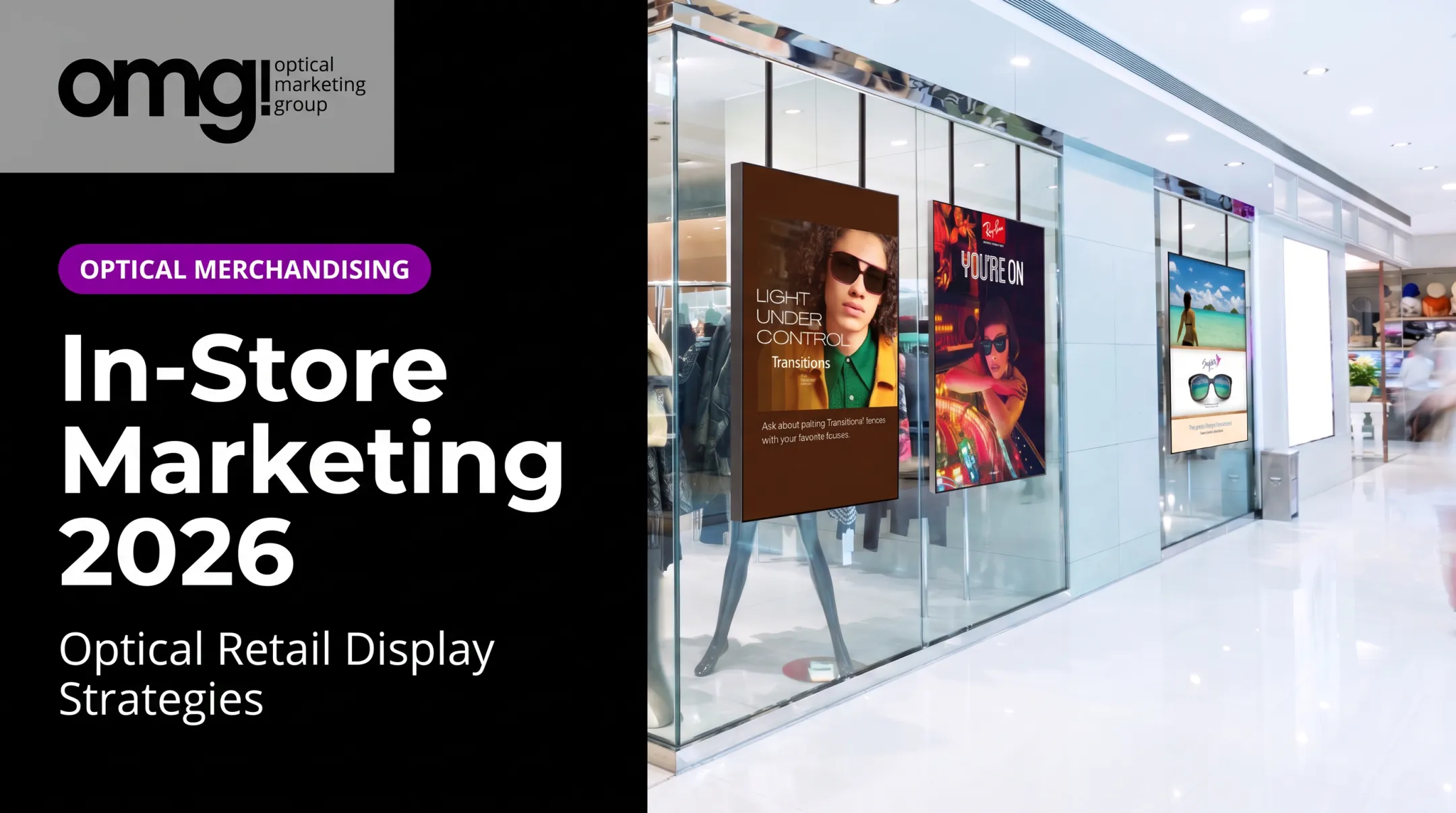
Insight Media Group has flagged curated frame selections and smart digital signage as defining 2026 optical retail shifts. Digital screens become a natural extension of the campaign assets you already produce for social.
Bringing the Campaign Into the Optical Environment
The campaign isn't finished when the ad goes live. It needs a physical home.
Map the Customer Journey
Trace the path from exterior signage to entrance, browsing area, frame displays, consultation point, checkout and follow-up. Window graphics with bold, high-resolution imagery stop foot traffic before a customer ever reaches the door.

Organize Frames Into Edits
Group frames into clear stories, such as "bold color," "everyday icons," "sun-ready" or "new shapes." Less than 5% of optical retailers have proper signage throughout their space, which leaves patients guessing where to look. Simple, consistent category labels fix that fast.
Design for Discovery, Not Clutter
Lighting, sightlines, display height and digital screens should make the featured collection visible without overwhelming the floor. Nearly 90% of purchase decisions happen in-store, so the physical merchandising carries as much weight as the campaign photography that got someone through the door.
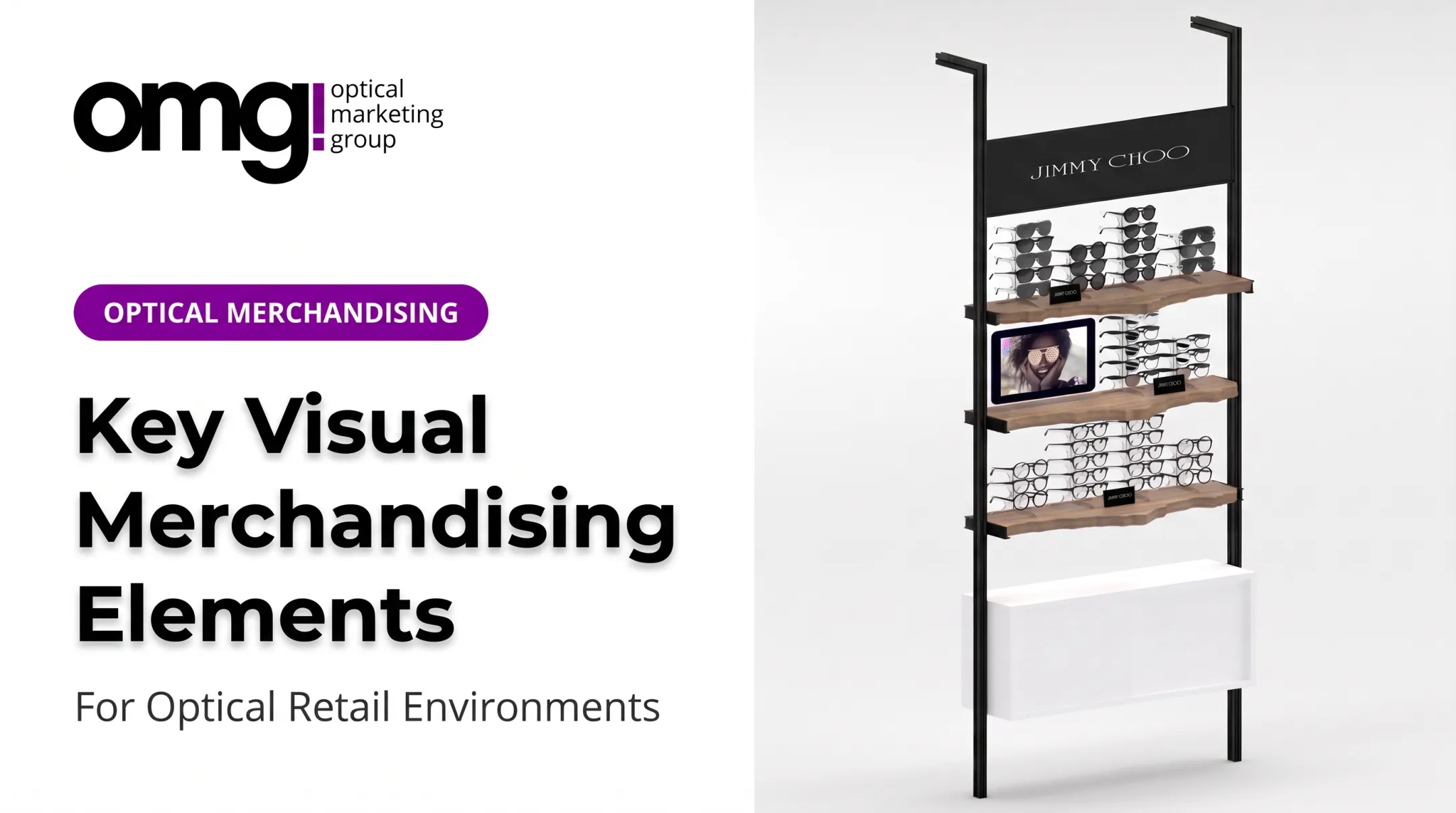
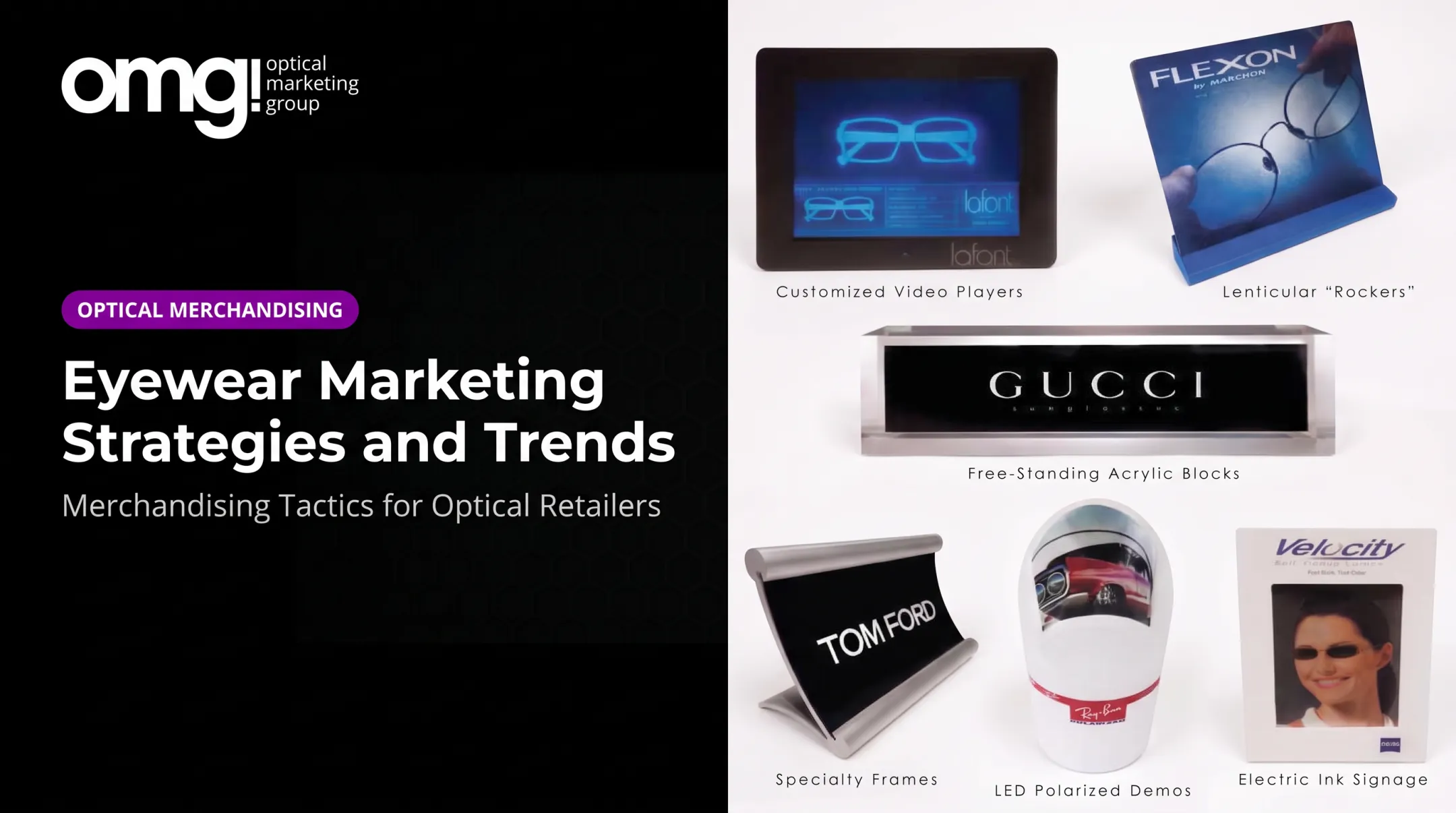
OMG! Optical Marketing Group builds the custom optical displays, branded graphics, signage and digital screens that carry the campaign onto the floor. Installation is coordinated as part of an integrated design-to-delivery process, so the concept does not stall between the ad and the dispensary.
Equip Staff and Review After Launch
Give staff short talking points connecting the campaign story to fit, comfort, lens options and lifestyle use, without overstating clinical claims. After launch, walk the space again: are there overlooked products, confusing navigation, or displays that don't match what the campaign promised online?
Frequently Asked Questions
What are the eyeglass trends for 2026?
Spring–Summer 2026 runways point to oversized wraparound sunglasses, skinny wire-rim optical frames, retro flat-top aviators and tinted or color acetate lenses. Validate any trend against your own collection and customer base before building a campaign around it.
What do Gen Z call sunglasses?
Common informal terms include "shades" and "sunnies," though neither is exclusive to Gen Z or any single platform. Use audience research for your specific customer base rather than forcing slang into campaign copy.
What are some catchy slogans for eyewear?
Strong slogan territories include perspective ("see yourself differently"), self-expression ("frames for every version of you") and seasonal freedom ("sun-ready, every day"). Keep language original and tied to your specific concept.
How early should an eyewear brand or practice plan a Spring–Summer campaign?
Plan well in advance, leaving enough time for trend validation, creative production, approvals, inventory coordination and staff training before launch. Promotional windows for optical events often run on a month-scale timeline rather than a single week.
How can a practice promote trends without feeling too fashion-focused?
Pair style storytelling with practical guidance, including fit, comfort, UV protection, lens options and prescription needs from qualified staff. The campaign concept can be fashion-led as long as the in-store conversation stays grounded in function.