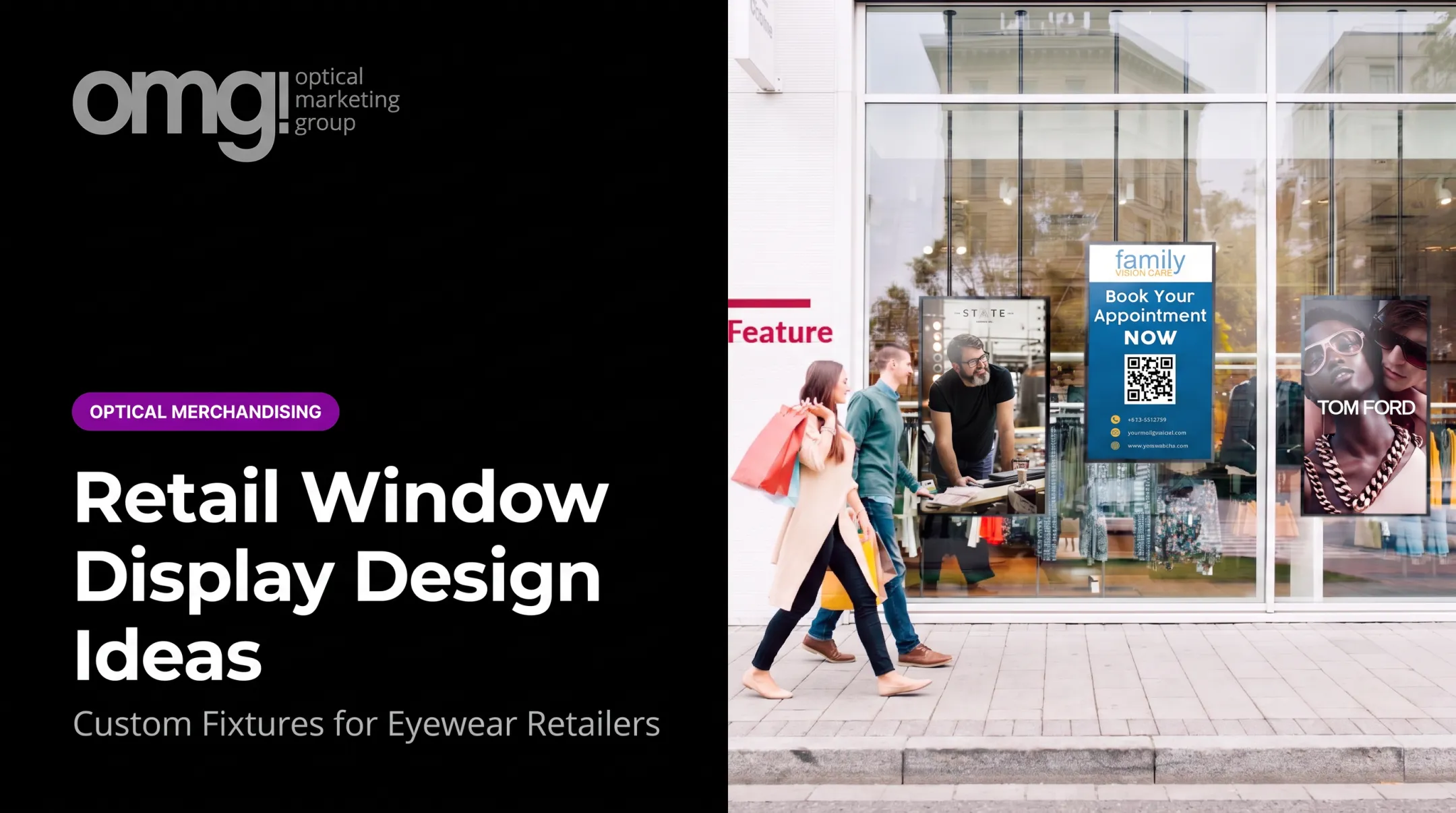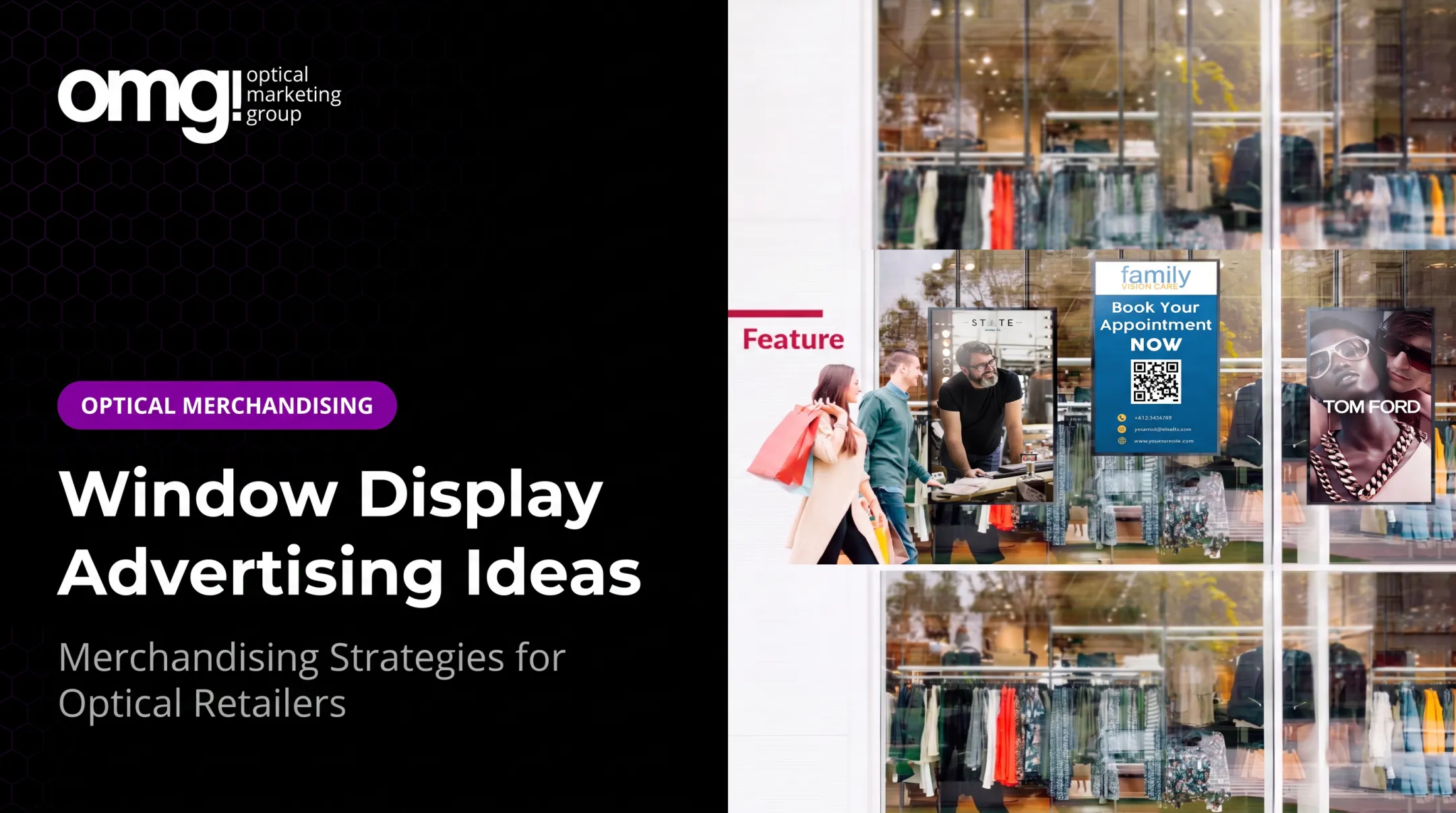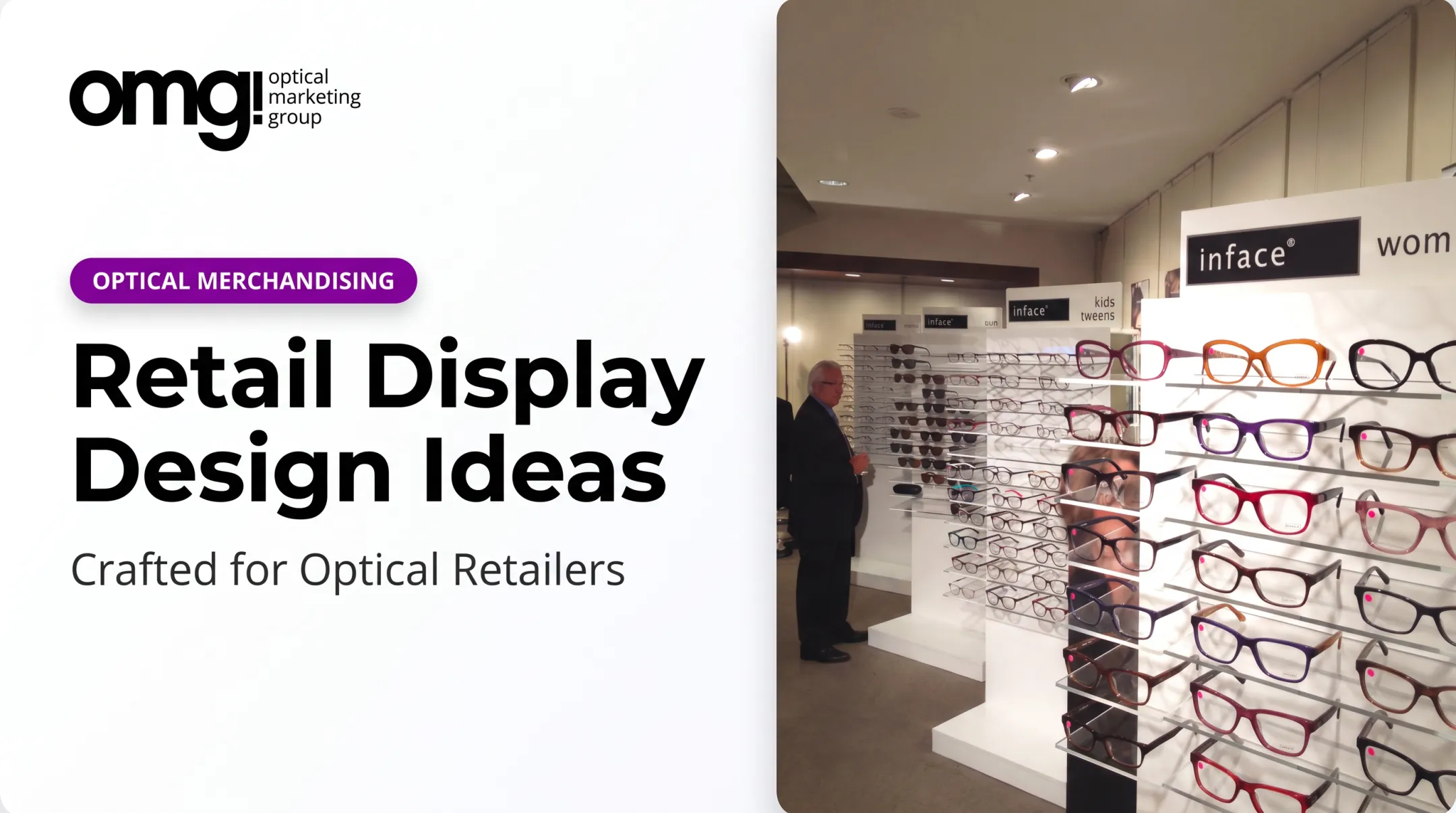

Nearly 90% of purchase decisions happen in-store, which puts real weight on whatever gets someone through the door in the first place. For optical retailers and eyewear brands, that window has to do something trickier than most: make a small, precise product feel desirable from twenty feet away.
Luxury in a display isn't about expensive materials or oversized installations. It's about intentionality: a clear visual hierarchy, disciplined use of space, and lighting that makes the product the hero. This guide covers display types, 2026 trends, design fundamentals, production planning, and cost factors, with specific notes on applying each to optical retail.
Key Takeaways
- A strong luxury window tells one story with one focal point, not several competing ideas
- Design around your customer, viewing distance, storefront shape, and the action you want them to take next
- Technology and sustainable materials should reinforce the brand story, not substitute for one
- Judge performance by store-entry behavior, QR scans, product inquiries, and direct customer feedback
Why Luxury Window Displays Matter
A luxury retail window display is a curated visual environment, not just a product arrangement. It combines spatial composition, materials, lighting, and a narrative thread to express what a brand stands for before a customer sets foot inside.
Done well, it does several jobs at once:
- Builds perceived value by signaling craftsmanship and intention
- Differentiates a storefront from neighboring retailers on the same block
- Introduces a new collection without a single word of sales copy
- Reduces uncertainty about what the brand actually sells
VMSD's storefront research found that effective windows compel passersby to stop, look, and react emotionally. Macy's creative manager Andi Woung frames the goal as curiosity and desire, not an immediate sale. The window's job is to start the journey, not finish it.
Louis Vuitton windows, for instance, consistently return to the theme of travel. Not because travel sells, but because it's central to the brand's identity. That repetition builds recognition over time, which matters more than any single display.
The Window as the Start of a Longer Journey
Exterior visibility should lead somewhere. A disciplined sequence looks like this:
- Curiosity at the glass
- Browsing inside
- A conversation with staff
- A purchase
- Eventual loyalty
Skip the first step and everything downstream gets harder.
For an optical practice, this translates directly. A window built around a curated frame collection or a seasonal eyewear story can make a clinical-feeling space read as retail-forward and current. The key constraint: showcase frames, lenses, and services through design and storytelling, not through medical claims the window can't actually make.
What Makes a Window Display Feel Luxurious?
Luxury reads through restraint before it reads through spend. A window with fewer, better-placed objects almost always outperforms one crowded with product.
Restraint and Composition
Limit the palette. Limit the product count. Leave real negative space around the hero item so the eye has somewhere to land. VMSD's 2026 coverage points to Dior's Düsseldorf windows as an example: a single, deliberately minimal statement that lets one idea breathe.
Composition principles that consistently work:
- One hero prop or product, clearly dominant over everything else
- Height variation to create depth instead of a flat line of objects
- Asymmetry over rigid symmetry, which tends to look staged
- A clear sightline from the sidewalk to the focal point
Materials and Craftsmanship
Surface finish, texture, and weight communicate brand values faster than any sign. Acrylic, metal, wood, resin, and fabricated composites each carry a different feel, and the finish matters more than the material itself.
Fendi's sustainability program describes collecting and repurposing wood, metal, and acrylic from past window builds, melting metal components for reuse and reprocessing resins. The lesson for anyone commissioning a display: ask what happens to the materials after the campaign ends, not just how they look on day one.

Lighting That Does Double Duty
Lighting is both functional and emotional. It needs to make the product readable and set a mood simultaneously, which is a harder balance than it sounds.
20/20's optical retail guidance recommends lighting frame fronts from above and keeping the display simple enough that it doesn't block the view into the store. Test every lighting plan from the actual sidewalk, in daylight and after dark. Glare on lenses or polished props will undercut the entire effort.
A Quick Quality-Control Checklist
Before launch, confirm:
- Finishing is clean with no visible hardware or seams
- The installation is physically stable and secure
- Brand colors match approved specifications exactly
- Signage is legible from typical viewing distance
- Products sit at an angle that reads well through glass
- Multiple windows or locations look consistent with each other
Luxury Window Display Types and 2026 Trends
Six display formats cover most luxury retail situations, and they're not mutually exclusive. A product-led window can also be modular; a sculptural one can also be digital.
| Display Type | Best Used When | Optical Application |
|---|---|---|
| Product-led | Showcasing a small, exclusive selection | Three to five hero frames on pedestals |
| Story-driven/scenic | Launching a seasonal collection or heritage story | A travel or lifestyle theme tied to a frame line |
| Sculptural/artistic | Creating a memorable one-off statement | Commissioned art piece framing a flagship collection |
| Minimalist/quiet luxury | Letting one product carry the message | A single designer frame against clean negative space |
| Interactive/digital | Adding useful product or brand context | QR codes linking to lens technology details |
| Modular/reusable | Running the same window across multiple locations or seasons | Swappable graphic panels within one fixed structure |
Dior's contrasting approaches illustrate the range well: the brand's Düsseldorf windows went minimalist, while its 2025 New York holiday windows built elaborate gingerbread-house scenes that won design recognition that same season. Both work, because both match the brand's intent for that moment.
2026 Trends Worth Watching
Industry commentary points to several directions for the coming year, though these are creative patterns, not guaranteed outcomes:
- Purposeful digital interaction – screens and QR codes that add real information, not novelty for its own sake
- Tactile, handcrafted detail – visible craftsmanship over mass-produced finishes
- Reusable construction – materials and structures planned for a second life from the start
- Smaller, high-impact moments – fewer sprawling installations, more focused statements
For optical retail, these translate into showcasing frame craftsmanship up close, using digital signage to explain lens technology, and rotating curated seasonal collections through a modular frame system rather than rebuilding the window from scratch each time. Tools like OMG!'s Contentlinq-powered digital signage let a practice add that kind of purposeful interaction without overwhelming the product itself.
How to Plan and Produce a Luxury Window Display
Good windows start with a brief, not a mood board. Skipping this step is the single most common cause of budget overruns and missed deadlines.
- Define the brief – campaign objective, target customer, featured collection, brand message, launch date, duration, and the action you want viewers to take
- Audit the storefront – window dimensions, orientation, pedestrian approach, viewing distance, daylight exposure, power access, and accessibility requirements
- Develop the concept – mood boards, sketches, or renderings that identify the hero element, supporting pieces, and lighting plan
- Select materials and construction – weigh appearance against durability, weight, fire and safety requirements, and whether the display needs to be reused
- Build and approve prototypes – material samples, color checks, structural review, and a full-scale mock-up before committing to production
- Plan fabrication through removal – treat shipping, installation, and teardown as design decisions, not afterthoughts, with contingency time built into the schedule
VMSD's profile of Bloomingdale's designer Gina Mercatili traces exactly this arc: concept, detailed renderings, coordination with fabrication partners, and final installation. Her role doesn't stop at the rendering, and neither should anyone commissioning a display.
After launch, review performance using store-entry observations, staff feedback, customer questions, QR or digital interactions, and side-by-side comparisons against the previous campaign. That feedback loop is what makes the next window better than the last.

Where OMG! Fits for Optical Practices
OMG! Optical Marketing Group works with eyecare practices on custom optical displays, branded signage, lighting, fixtures, and merchandising so the window connects to what's happening inside the store. A modular system like the Del Mar Display System, for example, lets frames sit in floor-to-ceiling windows without blocking natural light or sightlines into the dispensary.
How Much Does a Luxury Window Display Cost?
There's no single price tag for a luxury window display, because the total depends on concept complexity, size, materials, lighting, technology, and how many locations need the same build.
Useful budget categories to plan around:
- Creative strategy and design
- Engineering and prototyping
- Fabrication and finishing
- Graphics and lighting
- Interactive technology
- Logistics, installation, and removal or storage
A single flagship installation behaves very differently from a repeatable multi-location rollout, a seasonal refresh, or a modular system built for reuse. A flagship might justify commissioned artwork and custom fabrication; a 20-location rollout needs components that ship, assemble, and look identical everywhere.
A detailed brief is what makes a quote accurate. When requesting an estimate, provide window dimensions, target launch date, desired lifespan, material preferences, and whether technology is part of the plan. Vague requests get vague quotes.
For reference, OMG!'s optical-specific offerings show how costs scale with scope:
- Optical Refresh: starts around $995
- VIP+ Premium Branding Solution: $2,849.95
- Full Practice Design buildout: $62,000–$155,000+, depending on square footage
A practice weighing where a window display fits into a larger space-planning project can start with OMG!'s Patient Experience Assessment and Project Planner tools to scope the full picture before requesting a formal quote.

Frequently Asked Questions
How much does a luxury window display cost?
Cost depends on design complexity, materials, dimensions, technology, fabrication quantity, logistics, and campaign duration. Request a quote using a detailed brief that specifies window size, timeline, and desired materials for the most accurate estimate.
What are the main types of luxury window displays?
The main formats are product-led, story-driven, sculptural, minimalist, interactive/digital, and modular displays. The right type depends on your brand objective, target customer, and the physical conditions of your storefront.
What are the key luxury window display trends for 2026?
Expect purposeful digital interaction, sustainable or reusable construction, handcrafted materials, immersive storytelling, quiet luxury minimalism, and modular systems built for multiple campaigns. These are directional trends from current industry commentary, not guaranteed formulas.
What makes a luxury retail window display effective?
Effective windows have one clear concept, a strong focal point, premium execution, and controlled composition. Lighting, brand relevance, and product clarity all need to work together toward a defined next step, whether that's walking in or scanning a code.
How do you design a luxury window display?
Start by defining your audience and objective, then move through concept development, spatial planning, material selection, prototyping, lighting tests, fabrication, and installation. A post-launch review closes the loop and informs the next campaign.