
Introduction
A well-timed offer can pull patients through the door. But if they can't find the product, understand the deal, or connect it to their own needs, that offer falls flat. Nearly 90% of purchase decisions happen in-store. Your dispensary has to finish the work your email or window sign started.
Many US eyecare practices run into the same roadblocks:
- Dated dispensaries that feel more clinical than retail
- Frame boards with no clear organization
- Signage that's either missing or impossible to read from the doorway
- Short browsing windows squeezed between exam and checkout
- A hard disconnect between the clinical visit and the retail experience
This article covers what sales promotions and merchandising actually mean, how to build a strategy around them, and specific tactics for the optical floor. You'll also see how to measure whether any of it worked, without promising results it can't prove.
Key Takeaways
- Promotions give patients a reason to act; merchandising makes that reason visible and easy to follow through on
- Layout, lighting, signage, and staff messaging should all point to one consistent offer
- Track browsing behavior and capture rate alongside redemptions, not instead of them
- Keep promotions clear, useful, and aligned with how your practice already presents itself
What Are Sales Promotions and Merchandising?
Sales promotions are time-bound incentives or messages built to prompt a specific action, like trying a new frame line, buying a second pair, upgrading to premium lenses, or returning for a seasonal event.
Merchandising is the deliberate setup of products, space, signage, displays, and pricing information so patients can discover and understand what's in front of them.
These are different jobs, and an optical example makes the distinction clear:
| Function | Example |
|---|---|
| Merchandising | A frame display organized by lifestyle use |
| Promotion | "50% off your second pair" messaging |
| Marketing | The email announcing the offer |
| Sales | The optician's recommendation at the counter |
When all four line up, the patient moves smoothly from awareness to purchase. When they don't, a promotion can underperform for reasons that have nothing to do with the discount itself:
- Patients never see the signage
- The offer's value isn't obvious at a glance
- Eligible products are hard to locate
- Nobody connects the promotion to the patient's actual need
OMG! Optical Marketing Group's merchandising guidance puts it simply: clearly and professionally communicating a practice's identity and offering is what makes the buying experience work. A frame board full of unlabeled inventory doesn't do that job, no matter how good the underlying discount is.
Build a Sales Promotion and Merchandising Strategy
Start With an Objective, Not a Discount
Before setting a percentage off, decide what you're actually trying to accomplish. Common objectives include:
- Introducing a new frame collection
- Building awareness of premium lens options
- Encouraging second-pair purchases
- Supporting a seasonal push, such as sunwear
- Moving slow-turning inventory
The discount is a tool. The objective is the point.
Segment and Keep the Offer Simple
Different patients need different messages:
- First-time eyewear buyers need education, not urgency
- Families respond to multi-pair value
- Prescription sunglass shoppers respond best around seasonal timing
- Contact lens patients may need a reason to consider frames at all
- Patients with outdated eyewear often just need a nudge
Whatever the segment, keep eligibility, timing, and exclusions easy to state in one sentence. Overcomplicated terms confuse patients at the counter and trip up staff trying to explain them.
Build One Message, Then Repeat It Everywhere
Pick the single most compelling benefit and carry it consistently across window signage, dispensary displays, email, social, and staff talking points.
OMG!'s own "Ask About Our Multi-Pair Savings Plan" point-of-sale sign works because it's one line patients can read in two seconds and opticians can reinforce at the chair.
Seasonal timing matters too. Industry data shows sunwear's revenue share peaks in the spring and early summer, with June reaching its highest point of the year, according to GPN's sunwear data. Planning a sunwear promotion to land before that window, rather than during it, gives displays and staff time to prepare.

Before launch, lock down the basics:
- Inventory on the floor, not in the back room
- Display space cleared and signed
- Staff briefed on the offer and exclusions
A promotion for a frame line that's out of stock creates more frustration than goodwill.
Apply Merchandising Tactics in an Optical Practice
Entry Zones and Product Organization
The entry and transition zones set the tone before a patient even reaches the dispensary. These spaces should signal "retail" without blocking clinical traffic or crowding the sightlines.
Inside the dispensary, organize frames by a logic patients can follow on their own, whether that's style, lifestyle, collection, or price range. Add short discovery signage so patients don't need to ask staff just to find the sunglasses wall.
OMG!'s "frame boards are out" guidance reflects this directly: unlabeled wall boards are a 1950s retail model that confuses more than it helps.
Focal Displays and Signage That Work
Featured displays should feel curated, not packed. Industry guidance recommends placing priority eyewear at eye level, roughly four to five feet off the floor. The next-best spot sits just below it, according to 20/20's display guide. That hierarchy helps patients find what matters without wading through everything else.
Promotional signage needs to answer four questions at a glance:
- What's the offer?
- Who qualifies?
- When does it end?
- What should the patient do next?
Test visibility from the entrance and the waiting area, not just up close.
Connect Products to Real Use Cases
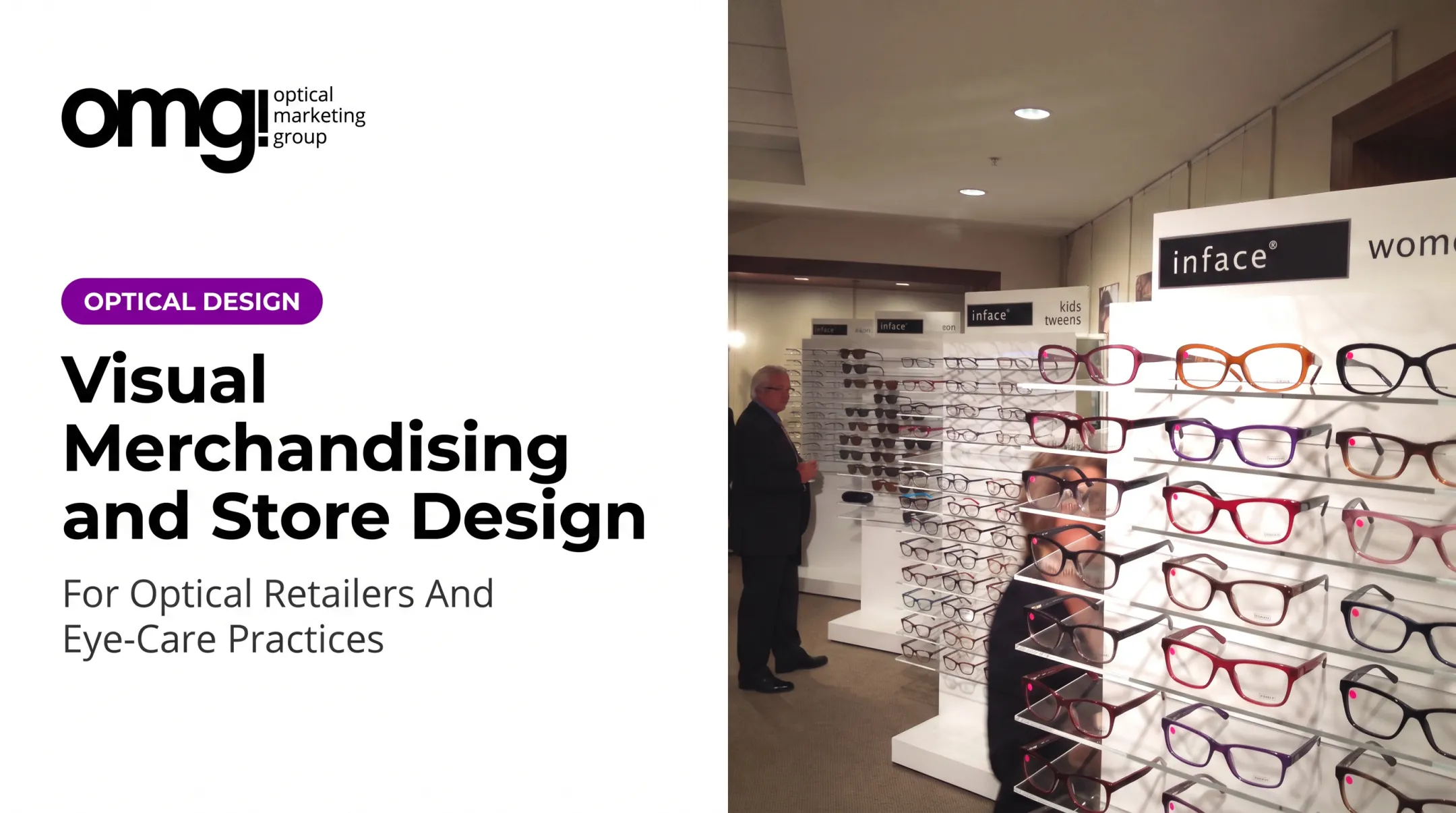
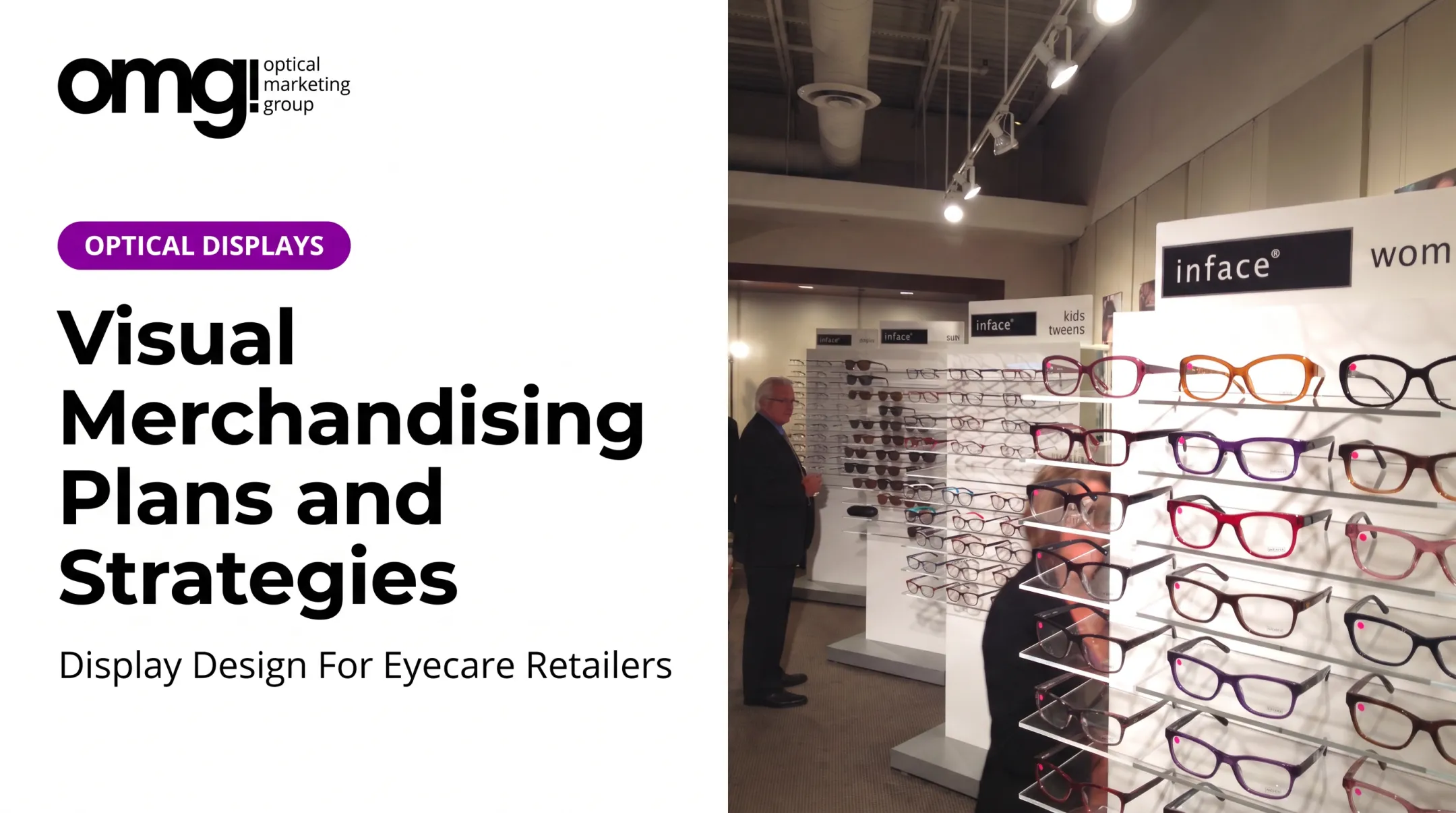
Pair frames and lenses with the situations patients actually live in: everyday wear, sun protection, work, sports, or heavy screen time. OMG!'s Merchandising, Signage, and Digital Display Refresh projects pair illuminated shelving with brand signage and digital screens, turning a static wall into a navigable, lifestyle-driven display.
Staff and Digital Touchpoints
Give staff short talking points tied to the displays, not scripts to memorize. Digital signage, including tablets and screens at the point of sale, can extend the story with rotating promotional or educational content without adding staff workload.
Example: Feature a new frame collection with a focal display near the entry, brand signage, a staff prompt for that collection, and a follow-up email to patients who tried frames but didn't buy. One message, four touchpoints.

Measure Execution and Improve the Next Promotion
Redemption counts alone don't tell you why a promotion worked or didn't. Build a baseline first, using whatever internal data is available:
- Optical capture rate
- Frame category sales
- Multiple-pair sales
- Average transaction value
- Inventory movement
- Appointment or inquiry trends tied to the campaign
Separate Reach, Engagement, and Conversion
A weak result can come from several different failures:
- Poor visibility – patients never saw the offer
- Unclear messaging – they saw it but didn't understand it
- Limited availability – they wanted it but couldn't find eligible stock
- Low demand – they understood it and still weren't interested
Multiple-pair purchasing is a useful benchmark here. GPN's analysis of complete-pair buyers found 9.5% purchase a second pair in the same visit, according to GPN's complete-pair analysis. If your second-pair promotion isn't moving that needle, the issue is likely visibility or messaging, not patient interest.
Audit While the Campaign Runs
Check, in person, that:
- Signage is placed where it was designed to be seen
- Displays are stocked and tidy
- Pricing matches what's advertised
- Staff can explain the offer accurately
- Physical and digital messaging match
Then ask patients and staff what was easy or confusing. That feedback, more than any single metric, tells you what to fix before the next campaign.
Turn the Strategy Into a Practical Practice Plan
A workable rollout follows a simple sequence:
- Assess the current patient journey from entrance to checkout
- Select one objective for the campaign
- Define the audience and the offer
- Design the message and display
- Brief the team on talking points
- Launch with inventory and signage confirmed
- Audit execution during the campaign
- Review results and adjust for next time

Strong execution still depends on a floor that makes the offer easy to find and try.
When to Refresh Instead of Remodel
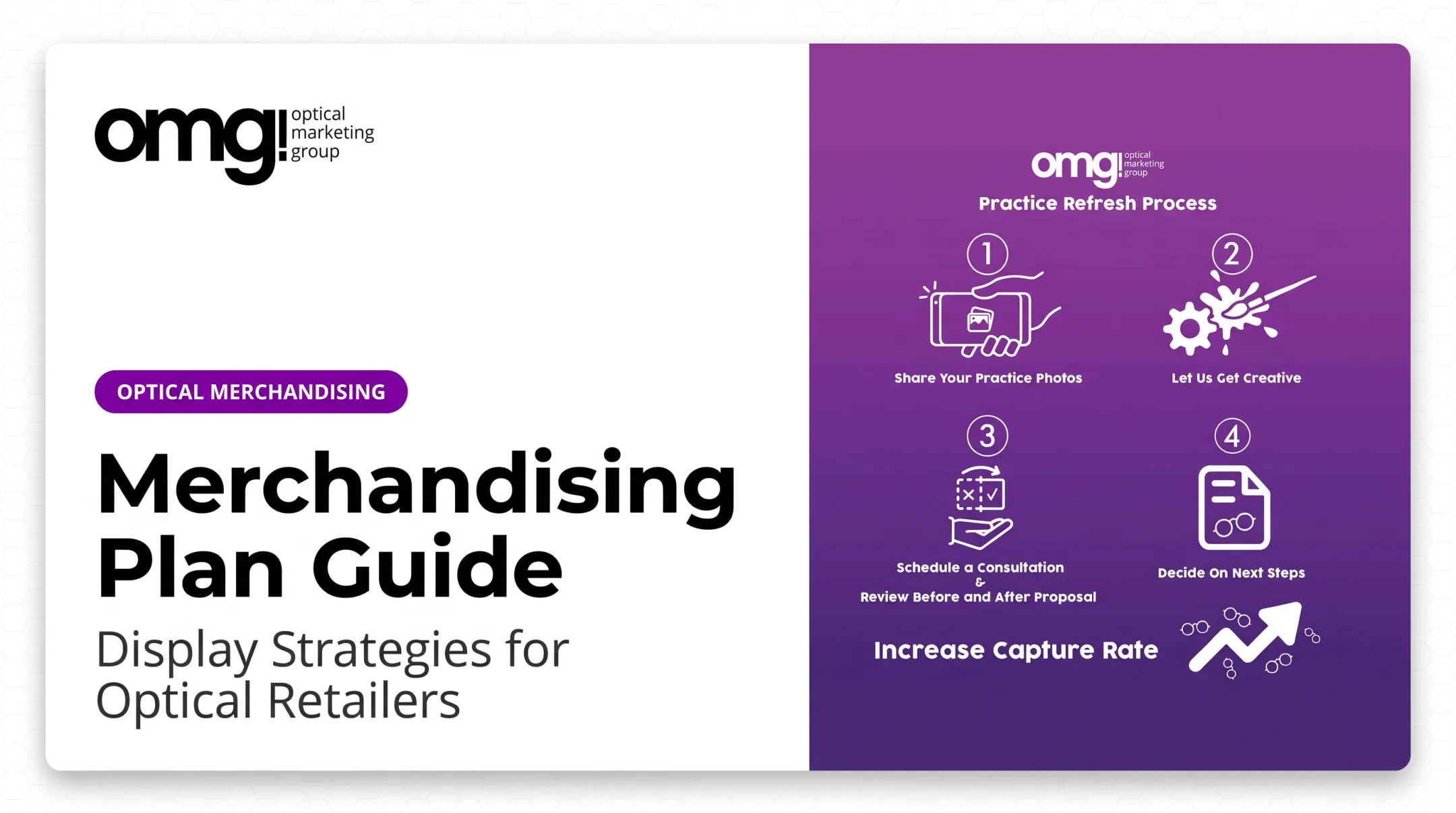
When layout or visibility holds promotions back, a full remodel isn't always necessary. Updated signage, better lighting, reorganized shelving, and new branded graphics often solve the same problem at a fraction of the cost and disruption.
OMG! Optical Marketing Group works with independent practices, multi-location chains, ophthalmology-based dispensaries, and eyewear brands on this kind of work: coordinated design, custom fixtures, signage, merchandising, and installation support.
For practices unsure where to start, OMG!'s Patient Experience Assessment and online Project Planner are free tools that flag traffic-flow, discovery, and branding gaps before you commit to a redesign.
If your dispensary's layout, signage, or display strategy works against your promotions instead of for them, talk to OMG! about a merchandising or practice design plan built around your patient journey.
Frequently Asked Questions
What is merchandising and promotion?
Merchandising is how products, displays, and signage are organized and presented. Promotion is a time-bound offer or message designed to prompt action. In an optical practice, merchandising makes a promotion visible and easy to act on.
What are the 7 rules of merchandising?
There's no single authoritative "7 rules" standard, but a practical framework covers: know your audience, present the right product, use a clear message, place it strategically, keep the offer simple, support it with staff and inventory, and measure the result.
How often should optical displays be refreshed?
Industry guidance suggests refreshing featured and window displays monthly to keep the dispensary feeling current and to highlight new collections or seasonal products.
What makes an eyewear promotion effective?
An effective promotion pairs a clear, simple offer with visible signage, available inventory, and staff who can explain it in one sentence. Confusing terms or hard-to-find products undercut even a strong discount.