
For US retail, service, hospitality, and eyecare businesses, storefront signage in 2026 has to do more than announce a name. It needs to build recognition, help people find the door, give them a reason to walk through it, and set up what happens once they're inside.
Internally, OMG! Optical Marketing Group has found that fewer than 5% of optical retailers have proper signage throughout their facility, which means patients often can't tell where to check in, where the frames are, or what the practice actually offers. That gap is common well beyond eyecare.
This guide covers five storefront sign ideas for 2026, plus a decision framework for choosing between them based on visibility distance, budget, update frequency, and local rules.
Key Takeaways
- Combine permanent, directional, promotional, and digital signs instead of asking one sign to do everything
- Prioritize clear copy, strong contrast, and brand consistency before adding decorative effects
- Match sign materials to weather exposure, viewing distance, and replacement cycle
- Treat windows, sidewalks, and entrances as one connected customer journey
- Eyecare practices should pair exterior signage with discovery-driven retail merchandising inside
Storefront Sign Ideas 1 and 2: Build Recognition and Visibility
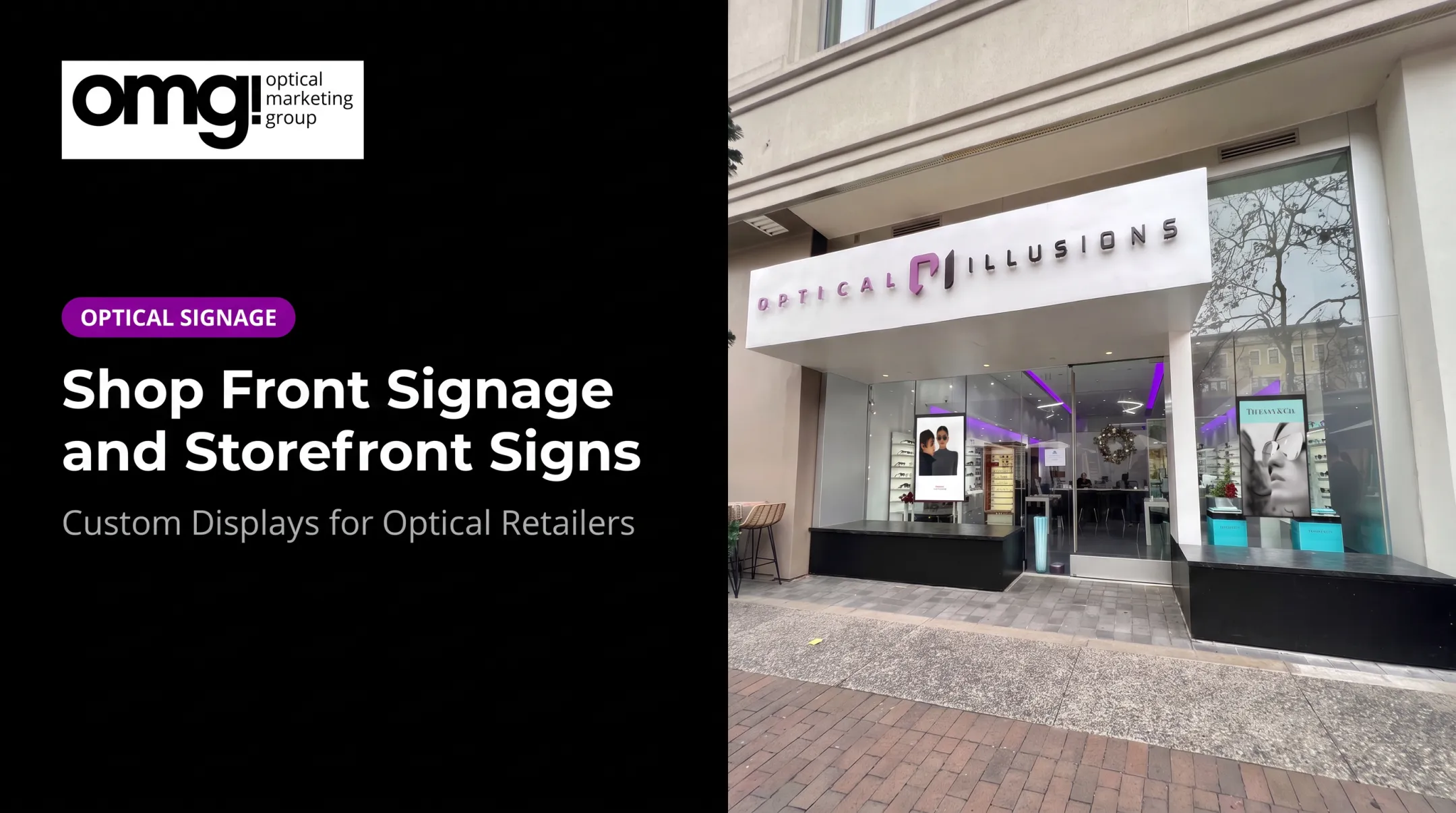
1. Dimensional, Illuminated, and Channel-Letter Signs
Channel letters, halo-lit lettering, and dimensional logos are still the backbone of storefront identity. They work day and night, and they read as permanent rather than promotional.
A few distinctions matter when choosing between them:
- Front-lit channel letters are bold and highly visible at night, best for businesses that want maximum nighttime recognition
- Halo-lit (reverse-lit) letters glow softly around the edges, giving a more upscale, understated feel
- Non-illuminated dimensional letters work well on well-lit storefronts or daytime-only businesses, with lower maintenance costs
For an eyecare practice, a clean cut-letter logo in flat-cut metal is a common choice. It reads as professional without feeling clinical or overly commercial. OMG! produces these as part of its cut-letter logo signage line specifically for optical storefronts.
One note before you commit: illumination and electrical connections often trigger a separate permit and electrical review, even when the sign itself is small. Confirm requirements with your local permitting office before fabrication, since rules vary significantly by city.
2. Blade Signs, Projecting Signs, and Branded Awnings
Blade signs hang perpendicular to the building, which makes them visible to pedestrians approaching from either direction. That matters most on narrow storefronts or blocks where a flat facade sign gets lost among neighbors.
Awnings do double duty. They shade entrances and protect window displays while adding a second branded surface. Keep the design simple: a logo or short phrase legible at walking speed, not a second advertisement competing with your main sign.
Placement guidance to keep in mind:
- Mount high enough to clear pedestrian traffic, with extra clearance over any area vehicles pass under
- Keep projection distance modest so the sign doesn't crowd neighboring storefronts or block sightlines
- Account for wind load on larger projecting signs and awnings
- Confirm local approval requirements before installation, since rules differ city to city
Storefront Sign Ideas 3 and 4: Turn Windows and Sidewalks Into Active Touchpoints
3. Window Graphics, Decals, and Transparent Discovery Signage
Windows are prime real estate that most businesses underuse. Graphics can communicate hours, promotions, social handles, or a quick brand story without any structural changes to the facade.
Separate your window graphics into two categories:
- Permanent identity graphics (logo, tagline, hours) that stay up long-term
- Replaceable campaign graphics (seasonal offers, new arrivals, events) swapped on a rotation
A 2016 window-display study found that more creative window presentations drew stronger attention and stronger intent to enter than less creative ones. That said, visibility alone isn't the whole story.

More transparent windows get noticed and looked at longer, but that doesn't automatically mean more people walk in. Pair an open sightline with a clear reason to enter.
OMG! has seen this play out directly. City Optometry in San Francisco used window graphics that prompted people to stop, stare, and walk in. The practice then stocked the exact frames shown in the display so customers could try them on immediately.
That link between the window and the shelf is what makes discovery signage work for eyecare, rather than feeling like a clinical privacy barrier.
4. A-Frame, Sidewalk, and Portable Promotional Signs
Street-level signs are built for messages that change often: daily specials, appointment openings, grand openings, or curbside pickup instructions.
A simple formula keeps these effective:
- One primary message: the single thing you want someone to know
- One supporting detail: price, time window, or availability
- Recognizable branding: logo or color scheme matching your main sign
- A call to action: a QR code, phone number, or simple instruction
Practical requirements matter just as much as design:
- Use a weighted base for wind resistance
- Choose weather-resistant materials
- Keep the sidewalk clear for pedestrians, wheelchairs, and strollers
- Confirm written city permission before placing anything on public sidewalk space
Rotate messages and track what works. If you're testing a QR code, measure scans. If you're testing an offer, measure redemptions. A-frames are cheap enough to experiment with.
Storefront Sign Idea 5: Make the Signage More Adaptable and Experiential
5. Digital, LED, QR-Enabled, and Interactive Storefront Signage
Digital signage lets a business update promotions, hours, or educational content without touching the physical sign. That flexibility is the whole appeal, but the hardware and content needs differ sharply depending on format:
| Format | Typical use | Key consideration |
|---|---|---|
| Static QR sign | Appointment booking, menu links | Needs a printed text alternative for accessibility |
| Indoor screen facing a window | Product demos, brand storytelling | Must stay readable through glass and sunlight glare |
| Fully outdoor digital display | Promotions, wayfinding | Needs weatherproofing and brightness control |
QR interactions remain a meaningful entry point. Bitly's 2026 trends report found global scan activity grew 6.2% year over year in the first half of 2026, with the US leading in code creation. That's platform-wide data, not a guaranteed storefront conversion rate, but it confirms QR codes are still getting used.
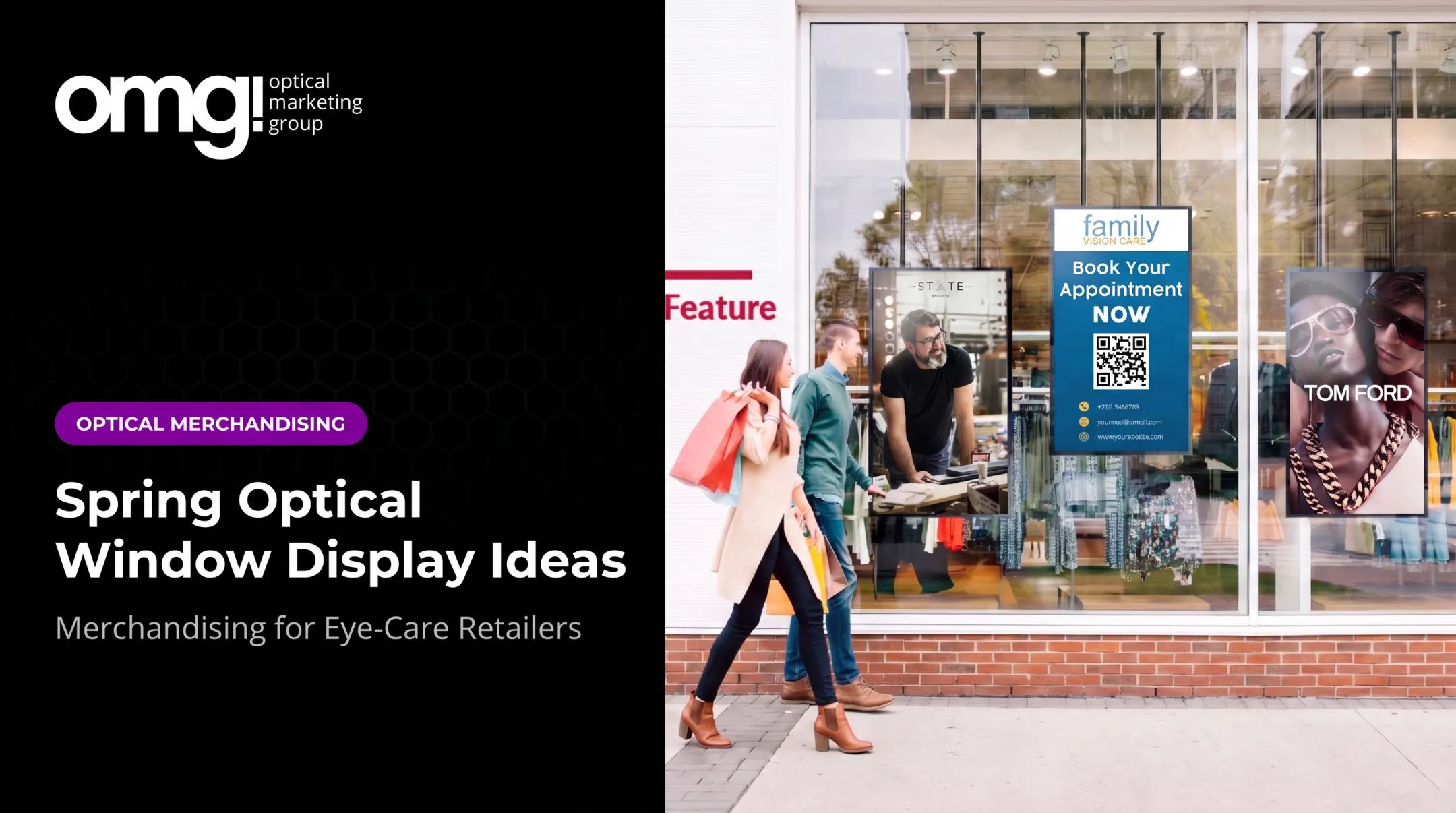
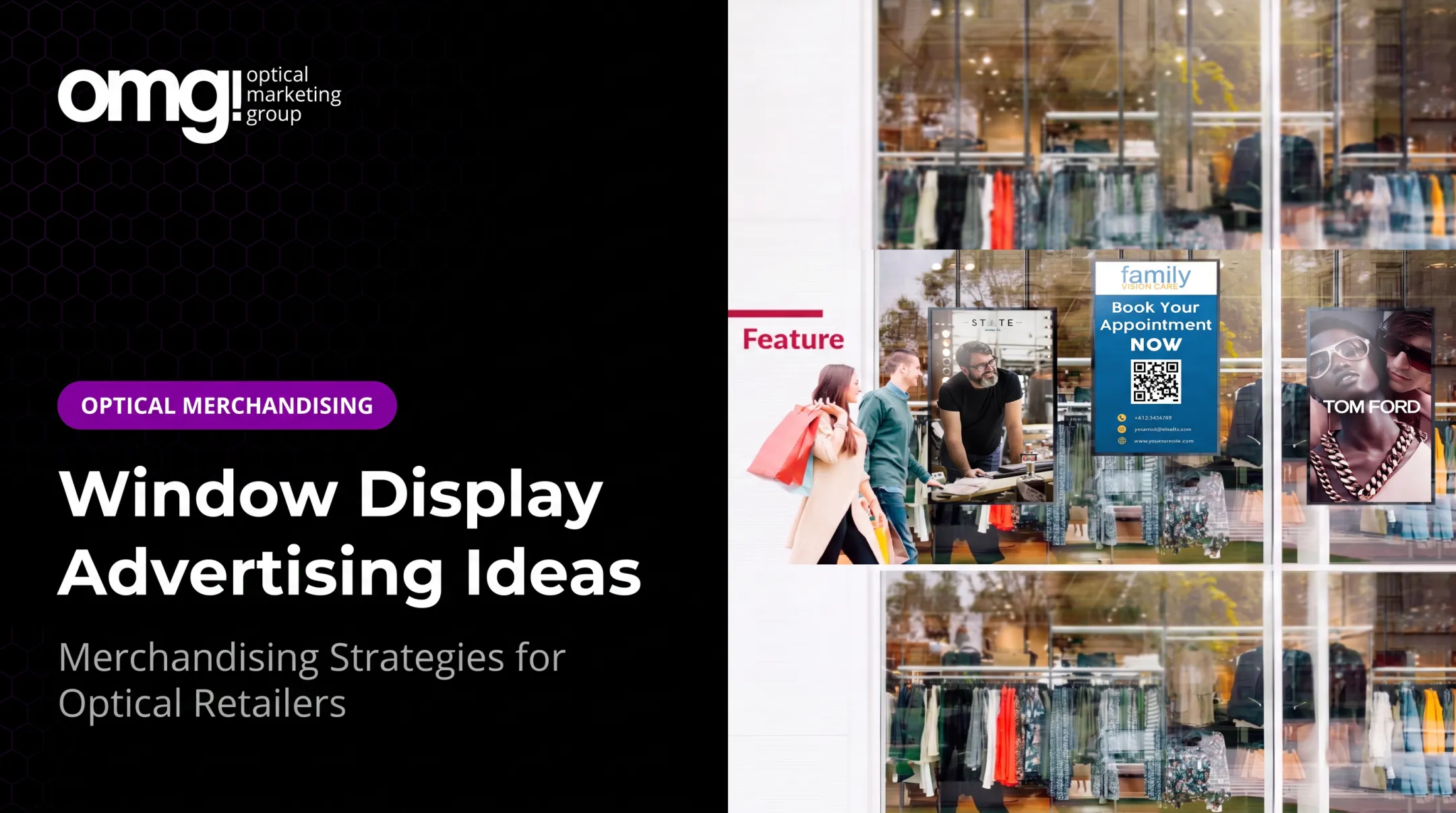
OMG!'s HD Series window-facing displays reach up to 5,000 nits and stay readable in direct sunlight, running 24/7 with automatic brightness adjustment for day and night. Gig Harbor Eye Care uses one to run product videos, a lens demo, a face-shape guide, and a photo booth, giving staff the ability to change messaging whenever they want instead of waiting on a new printed sign.

Keep one rule in mind: don't let the screen replace your identity sign. Pair digital or QR elements with a permanent dimensional sign so your business is still recognizable when the screen is off or the campaign changes.
How to Choose Among the Five Ideas
Before picking a sign, answer four questions:
- Permanent or temporary? Identity signs should last years; promotions should be easy to swap.
- Walking or driving traffic? Drive-by visibility needs larger type and simpler messages than foot traffic does.
- How often will the message change? Daily changes point toward A-frames or digital; quarterly changes suit printed graphics.
- Is the goal recognition, wayfinding, promotion, or experience? Each goal favors a different sign type.
Most storefronts need a coordinated system, not one perfect sign:
- One sign that helps people find the business from a distance
- One that gives them an immediate reason to enter
- One that supports navigation or discovery once they're near the door
Signage should be planned alongside facade materials, lighting, and interior sightlines rather than bought as a standalone graphic. That's where a specialist partner earns its keep. OMG! Optical Marketing Group integrates branded signage, window graphics, fixtures, and digital displays into one patient-facing environment for eyecare practices, so the exterior sign connects to what patients see at the dispensary.
What's Driving Storefront Signage in 2026
Customer Expectations and Connected Experience
Shoppers now expect the storefront, website, and social presence to feel like one brand. Salesforce's Connected Shoppers research found 88% of retailers consider unified commerce very important or critical to their business over the next two years. Physical stores still win on letting people touch products and leave with them immediately, which is exactly what good window and sidewalk signage should reinforce, not compete with.

Cost, Durability, and Operational Trade-offs
Fixed signs, replaceable graphics, and digital displays each carry different long-term costs:
- Dimensional/channel-letter signs cost more upfront but last for years with minimal upkeep
- Window and sidewalk graphics cost less per unit but need regular replacement and design labor
- Digital displays carry hardware and subscription costs but eliminate reprint and reinstall expenses entirely
OMG!'s branding packages reflect this layering directly. A $1,650 Very Important Practice package, for example, bundles four performance/directional signs with two promotional signs, covering both the permanent and rotating layers in one order.
Where Signage Is Headed Next
AI-assisted design workflows, greener sign substrates, and modular systems will keep gaining ground, especially for multi-location brands that need faster, consistent rollouts. The fundamentals still matter most: readable type, strong contrast, and a sign that works even when the technology behind it changes.
Conclusion
There's no single best storefront sign for 2026. The right choice depends on your goal, your viewing distance, how often your message changes, and what your local code allows.
The businesses getting this right in 2026 aren't replacing their identity sign with a screen. They're layering a durable, recognizable sign with flexible window, sidewalk, and digital elements that can change as often as needed.
For eyecare practices, that means thinking past the sign itself. An exterior that invites people in should connect directly to a dispensary that rewards the walk-in. That end-to-end planning is what OMG! Optical Marketing Group builds into its practice design work.
Frequently Asked Questions
How much does a storefront sign cost?
Cost varies widely by sign type, size, material, and illumination, with channel-letter signs commonly ranging from a few hundred to several thousand dollars. Compare quotes for a permanent sign, replaceable graphics, and digital options to see which fits your budget and update needs.
What are the different types of storefront signs?
Common types include dimensional or channel letters, blade signs, awnings, window graphics, A-frames, banners, monument signs, and digital displays. Each serves a different purpose, from long-term identity to short-term promotion.
What are some creative storefront sign ideas?
Layered sign systems, distinctive dimensional logos, story-led window graphics, and QR-enabled digital displays all stand out while staying readable. The best ideas stay true to your brand rather than chasing novelty for its own sake.
What are the do's and don'ts for storefront signage?
Do use short copy, strong contrast, readable type, and consistent branding across every sign. Don't overcrowd the message, block windows or walkways, ignore local permitting rules, or add motion without a clear purpose.
How do eyecare practices use storefront signage differently?
Eyecare storefronts benefit from pairing exterior identity with discovery-driven window displays that preview frames, lenses, or services. This bridges the sidewalk and the dispensary instead of treating the storefront as a separate, purely clinical entrance.