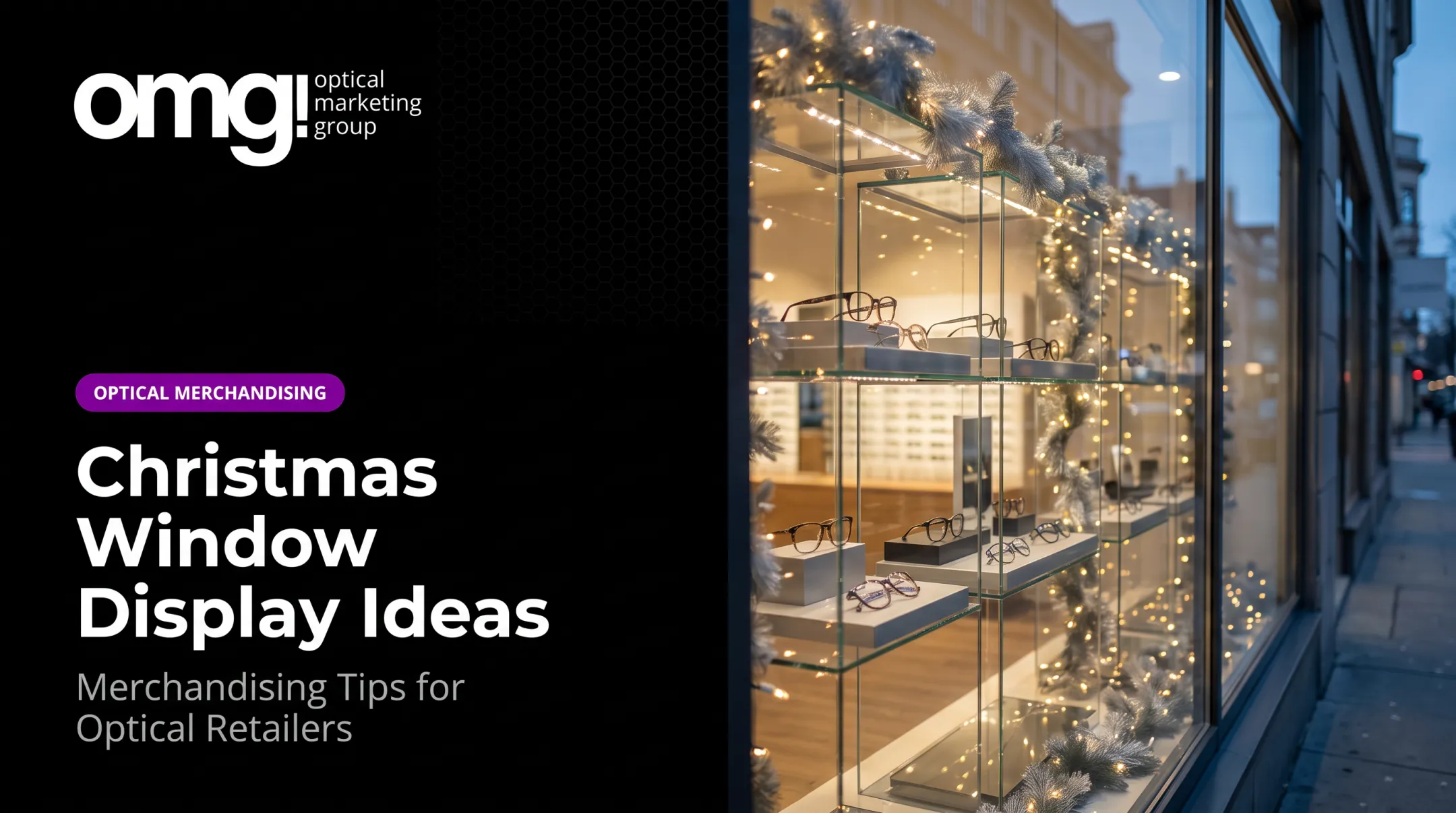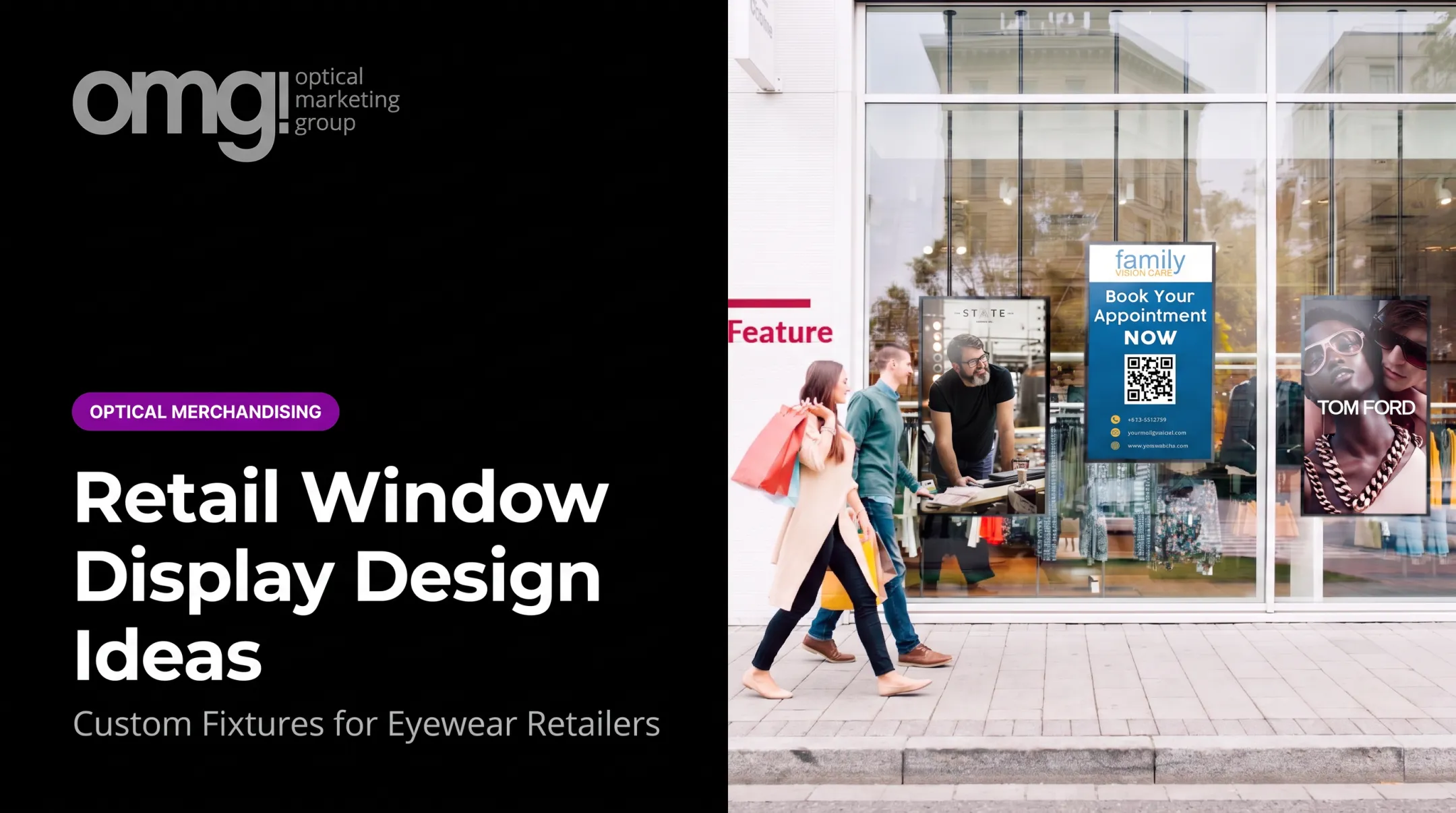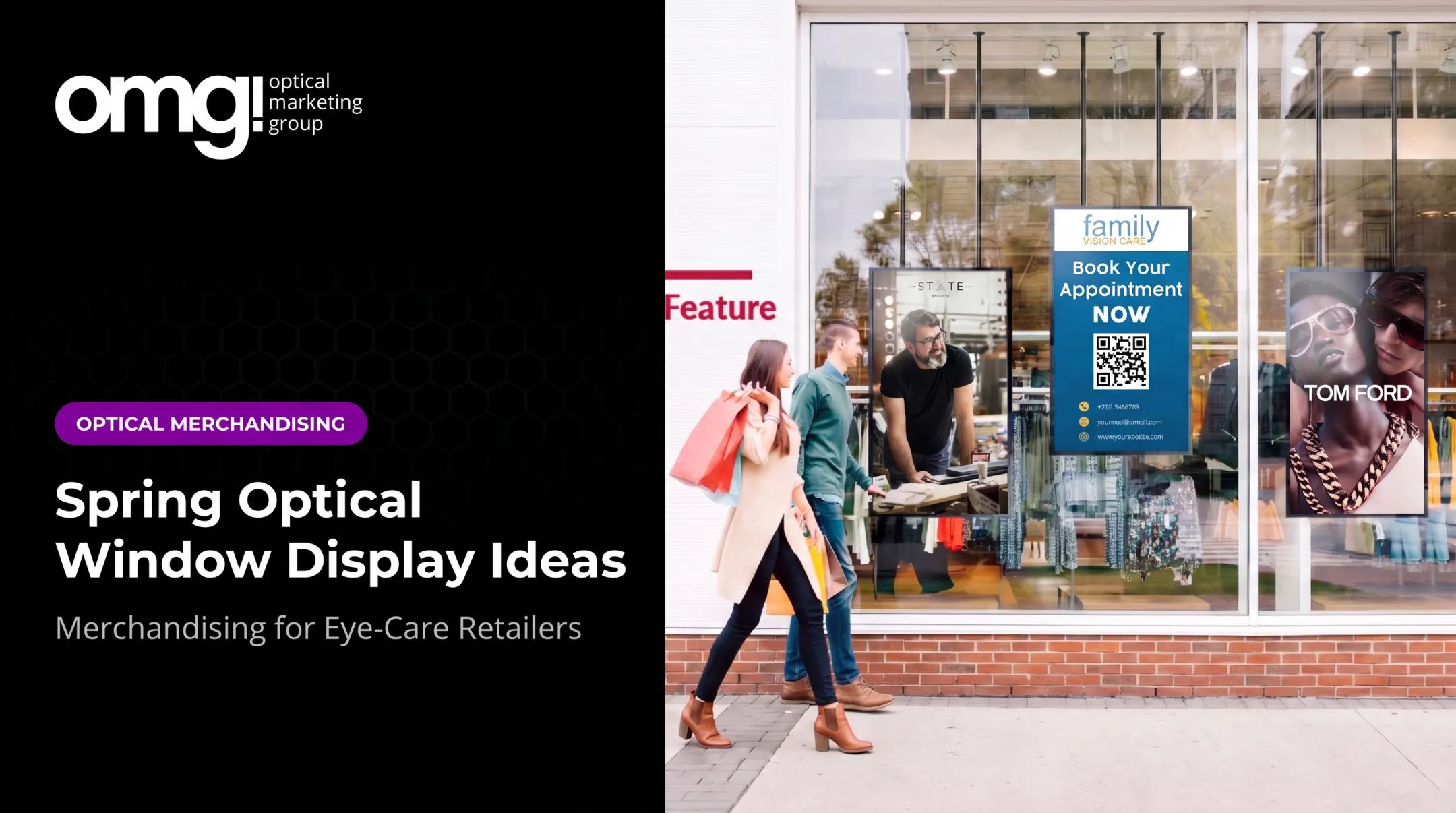

Passersby make snap judgments. A 2021 POPAI study of UK shoppers found window posters grabbed more attention than any other display type, yet only 52% of shoppers felt retailers used their window space well. Nearly a third said retailers didn't.
A window that communicates one clear idea, fast, can turn a walker-by into a walk-in. This article covers practical window display advertising ideas, static, seasonal, illuminated, and digital, with specific guidance for optical practices trying to balance retail appeal with clinical trust.
Key Takeaways
- A strong display pairs one focal point with a concise message, intentional lighting, and a clear next step
- The right concept depends on your audience, storefront size, budget, and campaign goal
- Optical displays should make frame discovery feel inviting while still reinforcing clinical trust
- Measure results through store entries, QR scans, appointment requests, and staff feedback
Window Display Advertising Ideas for Retailers and Optical Practices
Hero Displays and Lifestyle Scenes
Pick one product, one collection, one message. A single-collection hero display, say, a new sunglasses line or a seasonal frame range, works better than cramming in everything you sell.
Use negative space as a tool, not wasted room. One standout frame on a riser, surrounded by open space, draws the eye faster than a shelf full of options.
Lifestyle scenes add context without stealing focus:
- Sunglasses styled with a travel bag and sun hat for a vacation-ready feel
- Blue-light eyewear staged near a laptop and coffee cup for a work-from-home audience
- Children's frames in a backpack-and-notebook scene for back-to-school shoppers
The setting should support the product, not compete with it.
Seasonal Storytelling and Benefit-Driven Signage
Timely themes give you a reason to refresh. Summer sun protection, holiday gifting, and local events all create natural messaging angles, as long as the tone stays inclusive and on-brand.
Modern Optical's storefront refresh paired sunglasses and eye-exam messaging with a scannable QR code for appointments and a simple "Walk-Ins Welcome" sign. That mix turned the window into both a product showcase and a booking tool. City Optometry took a similar approach, combining an Oliver Peoples ad with service copy and shelves featuring Ray-Ban, Maui Jim, and Oakley.
When you translate benefits into signage, keep claims factual. The FTC's compliance guidance makes clear that advertisers are responsible for what a display implies, not just what it states outright. Health-related claims need substantiation before you post them.
Stick to verifiable product features such as lens coatings, frame materials, and appointment availability rather than unsupported medical promises.
Art, Color, and Shareable Moments
Color is a reliable attention tool. Johnston & Murphy built an entire window around vertical multicolor stripes paired with a minimalist shelf, letting the color carry the energy while the products stayed simple.
For optical environments specifically:
- Minimalist practices: White backgrounds, single risers, generous negative space
- Luxury dispensaries: Backlighting, brand plaques, and a curated color palette
- Family-friendly offices: Warm lighting, playful props, and accessible sightlines
- Bold contemporary spaces: Large-scale photographic portraits and saturated color blocks
A memorable detail, an unexpected prop, or a branded phrase can also encourage phone cameras to come out. Just keep your logo and call to action legible from the sidewalk, not buried behind the artistic flourish.
How to Plan and Create an Effective Window Display
Define Objective, Audience, and Format
Before sketching anything, answer one question: what should this window accomplish? Increasing walk-ins requires different design choices than promoting a frame collection or generating appointment requests.
Format matters too. Match the format to your space and goal rather than copying a neighboring store:
- Open-back windows preserve sightlines into the store and suit small boutiques wanting an airy feel
- Closed-back and shadowbox formats protect product and work well for high-value eyewear
- Elevated and island arrangements give larger storefronts more dimension
Build the Visual Hierarchy
Every effective display has exactly one focal point, one supporting message, and one call to action. Resist the urge to add a second hero product "just in case."
Optical merchandising guidance from industry sources recommends a pyramid layout: one frame positioned highest, others cascading below in an asymmetrical, odd-numbered grouping.
Background choice matters as much as placement. White or off-white backgrounds show off frame detail, while rimless styles often disappear against white and need a darker backdrop for contrast.
Light It, Make It Accessible, Connect It to the Interior
Lighting has to work in daylight and after dark. Glare off glass and reflections from shiny props can ruin visibility, so test your display at different times of day before calling it finished. LED lighting that highlights eyewear detail, rather than washing it out, tends to perform best for optical displays.
Accessibility isn't optional. The Access Board's guidance calls for keeping accessible routes generally clear to at least 36 inches, so floor-standing props or signage stands near your entrance need to respect that space.
Your window is also a preview, not a standalone piece. Signage, lighting, and frame displays should continue the same story once customers step inside. This is where OMG! Optical Marketing Group works as a design-to-delivery resource, combining custom optical fixtures like the Vista Feature Box or Center Island Display Table with branded signage and window graphics, so the exterior promise matches the interior experience.

Digital and Interactive Window Display Ideas
Rotating Content and Touch-Free QR Interactions
A single static poster can only say one thing. A digital screen can cycle through new arrivals, product demos, testimonials, and seasonal promotions without anyone touching a ladder. OMG's HD Series window-facing digital signage, for instance, is built for direct sunlight visibility, a practical requirement for anything mounted behind glass.
QR codes extend that reach further. Link a code to:
- An appointment request form
- A specific frame collection page
- A current promotion or educational page
Always test the code from the actual sidewalk distance. Lighting and glare can make a perfectly good code unreadable. Offer a non-digital alternative too, since not every passerby wants to pull out their phone.
Pairing Digital with Physical Merchandising
Digital signage works best as an addition to physical merchandising, not a replacement for it. A screen next to a well-lit frame display gives shoppers both motion and a tangible product to study.
OMG's 65″ Ultra Bright Window TV runs $3,995, and the 75″ model runs $4,995. Both are built for high-brightness, full-sun visibility.

For practices that want ongoing content without managing it themselves, Contentlinq offers managed window and in-store digital signage on a subscription basis:
- Cloud-based playlists
- Video campaigns
- Automatic content updates
How to Measure Results and Avoid Common Mistakes
Track the Right Indicators
Pick metrics tied to your actual goal, not vanity numbers. For most optical practices, that means:
- Store entries and foot traffic during the display period
- Featured-frame inquiries at the counter
- QR code scans and appointment requests
- Promotion redemptions
- Staff observations on what shoppers ask about
No universal benchmark exists for window-driven conversion, so treat your own baseline as the comparison point, not a generic industry number.
Common Mistakes to Avoid
The most common failure is overdesign. Industry guidance is blunt on this: optical clutter is out. A clean, curated window beats one trying to show every frame in stock.
Watch for:
- Competing colors that fight for attention
- Text too small to read from the sidewalk or a passing car
- Outdated promotions still hanging weeks after expiration
- Excessive animation that distracts from the actual product
Refresh Checklist
Check your display from multiple distances, since most people see it while walking or driving past, not standing still.
- Confirm one clear focal point exists
- Read all text from the sidewalk and from a car
- View the window in daylight and after dark
- Check for dust, smudges, or faded materials
- Confirm accessible routes remain unobstructed
- Verify featured products are actually in stock
- Compare messaging with your interior and online campaigns
Refresh monthly where possible. A display that looked sharp in March can feel stale by June.
Frequently Asked Questions
How much does display advertising cost?
Costs vary by format, creative production, fixtures, lighting, and whether you add digital hardware or ongoing content management. Separate one-time setup costs from recurring expenses like content subscriptions when budgeting.
What are some examples of display advertising?
Common formats include storefront windows, posters, illuminated displays, product showcases, point-of-purchase signage, branded fixtures, digital screens, QR-enabled displays, and seasonal installations.
What are some creative ideas for a window display?
Hero-product displays, lifestyle scenes, seasonal storytelling, bold color palettes, artistic props, minimalist arrangements, interactive screens, and optical-specific frame or lens themes all work well depending on your brand and audience.
What is a window display called?
Common terms include window display, storefront display, shop window, window dressing, visual merchandising display, and window advertising. They're often used interchangeably.
How effective is window display advertising?
Effectiveness depends on visibility, clarity, relevance, and freshness, not a fixed formula. Track entries, inquiries, featured-product interest, QR scans, and conversions to judge what's working for your storefront specifically.
How do you create an effective window display?
Define your audience and objective, choose one theme and focal point, add supporting signage, optimize lighting and readability, then check the display from outside before refreshing it based on results.