
Many retailers still treat their window as a shelf for overflow inventory rather than a communication tool. That's a missed opportunity. An effective display blends visual merchandising, brand storytelling, lighting, and a clear product focus, not just a pile of merchandise pressed against the glass.
This guide covers display formats, creative concepts, optical-specific applications, 2026 trends, and the practical steps for turning an idea into a working storefront.
Key Takeaways
- One focal point, one audience, and one message beat a crowded window every time
- Optical practices should pair clinical credibility with an inviting, curated retail feel
- Lighting, contrast, and negative space decide whether a display reads clearly day and night
- Every concept should point toward a next step: walking in, browsing frames, or scanning a code
Types of Retail Window Displays
The right format depends on your storefront's size, visibility, interior layout, and how much visual control you need. Here's how the major types break down.
Open Window Displays
Open displays remove the backdrop entirely, letting shoppers see straight into the store. This builds transparency and invites curiosity about what's inside.
The tradeoff: visible wiring, stockroom clutter, or inconsistent interior presentation can undercut the effect. An open window only works if the interior behind it looks as intentional as the display itself.
Closed and Semi-Closed Window Displays
Closed displays use a solid backdrop to separate the window scene from the sales floor entirely. This gives you full control over lighting, composition, and storytelling, which makes it a strong choice for seasonal campaigns or hero-product features.
Semi-closed displays split the difference. Partial barriers or half-height walls frame the scene while still letting passersby glimpse the interior, according to Unibox's format guide. This format balances focus with a sense of openness.
Elevated, Corner, Island, and Shadowbox Displays
These formats solve specific visibility challenges:
- Elevated/plinth displays bring merchandise to eye level on podiums or platforms
- Corner displays sit at the junction of two exterior walls, visible from two directions
- Island displays stand freestanding within a large storefront for all-around viewing
- Shadowboxes are small, recessed showcases built for a single hero piece or small collection
Match the format to the product and the viewing distance. A shadowbox suits a single statement frame; a corner window suits a lifestyle scene meant to catch foot traffic from both directions.

Retail Window Display Design Ideas for Stores and Optical Practices
Once you've settled on a format, the next question is what goes inside it. These concepts work across retail, with specific notes for optical practices.
Hero Product or Hero-Frame Display
Build the entire composition around one standout item: a flagship frame, a new lens technology, or a seasonal collection. Add two or three supporting elements at most. Anything more starts competing with the hero instead of reinforcing it.
Lifestyle Vignette
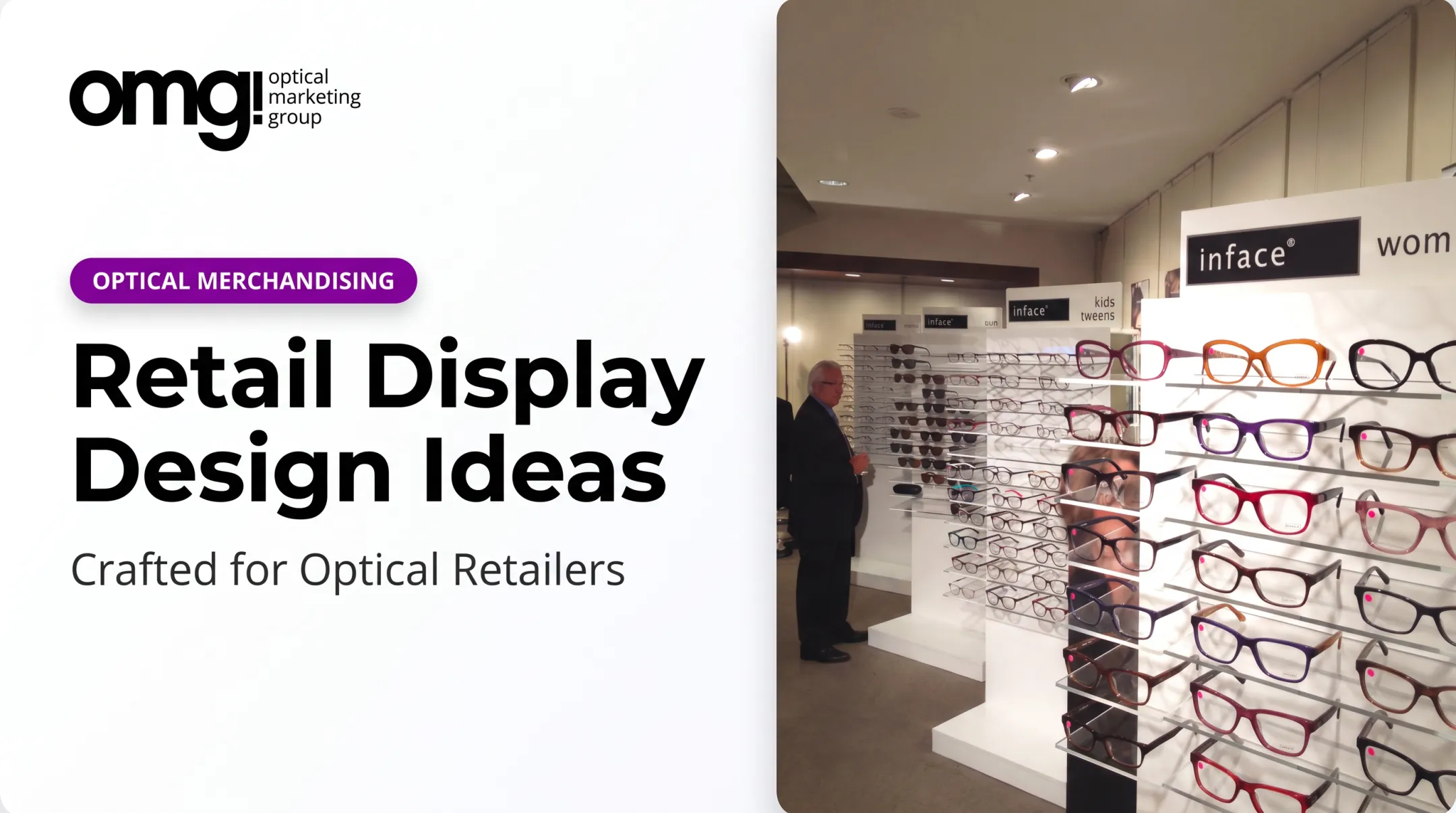
Show the product in context. OMG!'s displays, for instance, often pair lifestyle photography with illuminated shelving and rows of frames so the eyewear feels like part of a scene, not an isolated object. Keep the featured frames easy to spot within the setting.
Color-Blocked or Monochromatic Collection
A restrained palette, pulled from your brand or a seasonal frame collection, organizes multiple products without looking busy. One well-known example: a Johnston & Murphy window built around vertical multicolor stripes and the simple line "a kick of color," paired with a single minimalist shelf.
Layered Transparency and Dimensional Depth
Combine glass graphics, suspended elements, shelving, and background panels to create depth. The rule here is restraint: every layer needs to preserve sightlines. A window that looks rich up close but like visual noise from the sidewalk has failed its main job.
Seasonal or Campaign-Based Storytelling
Build a repeatable concept, then refresh the details instead of redesigning from scratch each time. Back-to-school eyewear, sun protection messaging, or holiday gifting all work well as recurring campaign frameworks.
Discovery-Driven Signage
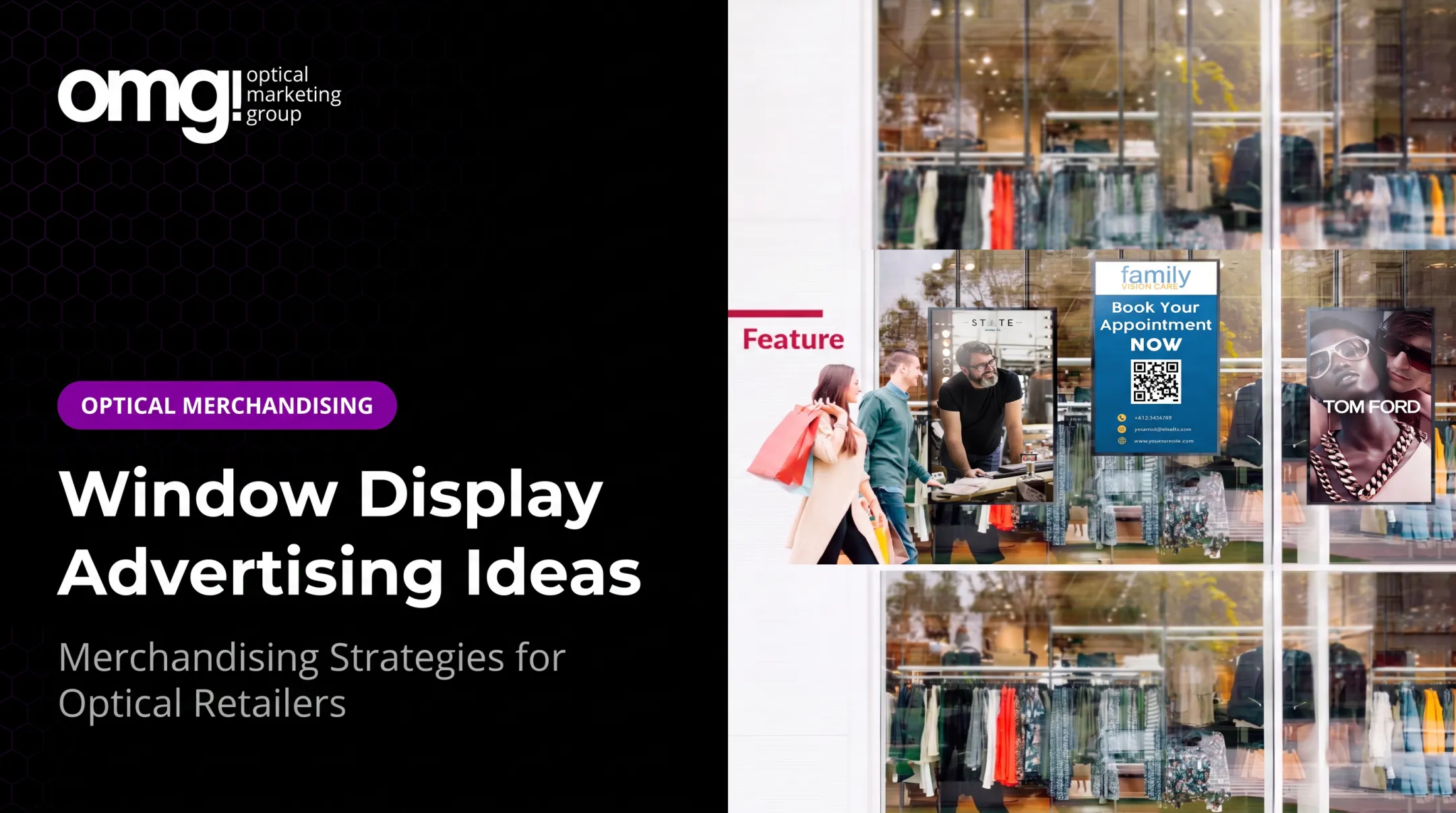
Short headlines and clear benefit statements outperform dense copy every time. A sign that reads "Walk-Ins Welcome" with a scannable QR code for appointment booking communicates more at a glance than a paragraph of clinical language ever could.
Illuminated and Digital Displays
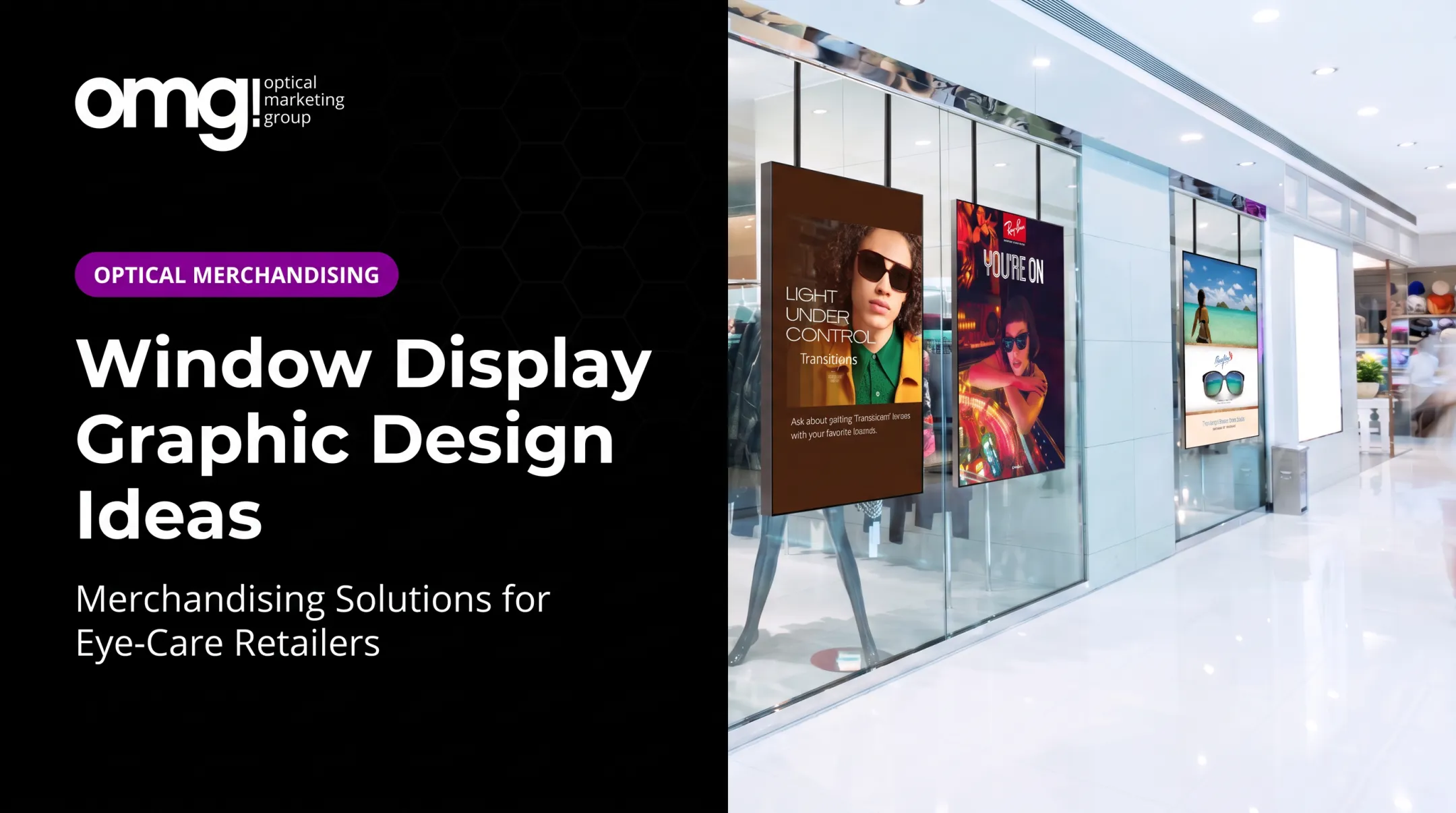
Lightboxes, edge lighting, and screens pull attention from across the street. Brightness matters more than most retailers assume. Modern window displays need enough output, often rated in thousands of nits, to stay legible in direct sunlight. Keep looping content short and make sure motion supports the product rather than distracting from it.
Community and Brand-Story Display
Incorporate brand heritage, a design story, or genuine local partnerships. Keep any community claims accurate. A display that implies local involvement the practice hasn't earned undercuts the trust it's trying to build.
Design Principles That Make a Window Display Effective
Format and concept only work if the underlying design principles hold up. These apply regardless of what's in the window.
Clarity and Visual Hierarchy
The eye should move from the largest shape to the product, then the message, then the brand mark, then any call to action. Pick one primary message. Trying to say three things at once usually means saying nothing clearly.
Color, Contrast, and White Space
Complementary contrast improves visibility from a distance, while a restrained color palette reads as more sophisticated up close. Negative space matters more for small storefronts and eyewear displays specifically, since frames are small products that get lost in a busy composition.
Focal Point, Scale, and Viewing Distance
A display needs to work at three distances:
- Broad shapes and contrast from the street
- Product and message at mid-range
- Craftsmanship detail right at the glass
Since frames are relatively small, large-format graphics or window clings help a display register with a driver or a distant pedestrian who'll never reach the glass.
Lighting and Reflection Control
Ambient light, interior reflections, and glare change throughout the day. ERCO's shop-window guidance recommends layering accent spotlights for emphasis with broader floodlighting for background depth, rather than relying on a single light source. Test any display at different times of day, including after dark, before calling it finished.
Storytelling and Emotional Connection
A window should communicate an experience, not just list inventory. Tie the story to what the target customer actually needs, whether that's confidence for a job interview or comfort for a long flight.
Branding and Call to Action
Logo, brand colors, a website or social handle, a QR code, or an appointment prompt all belong in the window, but only if they stay legible. A cluttered call to action is worse than none at all.
Accessibility and Maintenance
Readable type, clear sightlines, and safe installation keep a display usable for everyone. Upkeep determines whether a display still signals quality a month in:
- Dust the glass
- Check that lights and screens still work
- Swap damaged graphics before they become the first thing customers notice
How to Apply Window Display Design to Optical Retail
Optical windows carry a dual job: proving clinical credibility while still feeling like a place to shop. Here's how to balance both.
Balance Clinical Credibility With Retail Appeal
Avoid letting exam equipment, insurance jargon, or dense promotional copy dominate the glass. The window should feel trustworthy first, then stylish.
Organize Displays Around Customer Needs
Theme the window around a specific need:
- Everyday eyewear
- Premium frames
- Children's glasses
- Sports sunglasses
- Lens education
Each theme works best with a focused product selection and one clear benefit, not a catalog dump.
Present Frames at the Right Scale and Angle
Eye-level placement matters, along with varied elevations so the eye doesn't flatten across one row. Secure fixtures and spacing between frames prevent the cluttered look that undermines a clean presentation.
Lighting should preserve frame color and lens clarity without throwing reflections across the glass.
Extend the Window Journey Into the Dispensary
Window colors, signage, and campaign language should carry through to the optical area. If a customer walks in chasing a specific display, they should find that same product category waiting just inside.
Use the Window to Improve Browsing and Patient Flow
A well-planned display gives patients something to explore before or after an appointment. That reduces the "where do I even start" hesitation that slows down staff and browsing alike.
Nearly 90% of purchase decisions happen in-store, which makes that first visual impression carry real weight.
Build Repeatable Concepts for Multi-Location Practices
A flexible system keeps brand consistency intact across locations without reinventing each window from scratch. That means approved colors, signage rules, and fixture components that adapt to different storefront sizes.
Where a Design Partner Helps
This is where a studio like OMG! Optical Marketing Group fits in. OMG! builds window graphics, digital signage, brand signs, and frame displays as part of a coordinated point-of-purchase process, rather than treating each element separately.
Its Practice Refresh service pairs design recommendations with before-and-after visualizations and a project estimate. The $995 consultation fee is credited toward implementation if a client moves forward. The aim is better patient experience, stronger optical browsing, and more multiple-pair sales, without promising guaranteed results.
How to Turn a Window Display Idea Into a Practical Storefront
A good concept still needs a practical path to execution. Here's the sequence that keeps a project on track.
1. Start With a Concise Creative Brief
Define these items before any design work begins:
- Target customer and campaign objective
- Hero product and primary message
- Brand requirements
- Storefront dimensions
- Budget and launch date
2. Audit the Physical Environment
Measure the window, map sightlines, and note sunlight direction, existing signage, power access, and visibility from common pedestrian or vehicle approaches.
3. Select Materials and Fixtures for the Use Case
| Material | Best for |
|---|---|
| Acrylic, laser-cut | Durable signage, easy to clean with mild soap and a microfiber cloth |
| Metal, flat-cut | Finish flexibility and durability in public-facing fixtures |
| Printed graphics/window vinyl | High-impact imagery, relatively quick production |
| Digital screens | Changing campaigns, motion content, QR-driven calls to action |
4. Plan Production, Installation, and Review
Mock-ups and scaled drawings catch problems before the display is built permanently into the window. Review the finished setup from outside the store and from inside the retail area. Both perspectives matter.
5. Create a Measurement and Refresh Process
Track foot traffic, QR code scans, appointment requests, and staff observations about customer questions.
As a planning reference, Displaysense recommends small updates every few weeks and a full concept change every one to two months. One California optical practice, Uber Optics, has kept a monthly story-led refresh for a decade, according to INVISION's reporting.
6. Launch Day Checklist
- Clean glass, inside and out
- Working lights and screens
- Securely mounted fixtures
- Message readable within seconds
- Accurate products and current pricing
- Branding aligned with in-store signage
- Maintenance date scheduled

Build a Window Display That Leads Customers Inside
The strongest window displays share four traits: clear, audience-focused, brand-consistent, and connected to what happens once a customer steps through the door.
- Lead with one business goal and one hero message
- Let format, materials, and lighting support that single idea
- Tie the call to action to the experience inside the door
Start there, then build every other choice around it.
For optical practices weighing a storefront refresh, OMG! Optical Marketing Group's Patient Experience Assessment and Project Planner are built to evaluate exactly these decisions, from storefront graphics to interior wayfinding and lighting.
Frequently Asked Questions
What are the different types of window displays used in stores?
The main formats are open, closed, semi-closed, elevated, corner, island, and shadowbox. The best choice depends on your storefront size, product category, viewing angles, and how much visual control you want over the scene.
What are the key window display trends for 2026?
Current reporting points to flexible modular displays, digital and interactive content, immersive storytelling, and sustainable materials, according to VMSD's 2026 storefront coverage. Low-clutter, curated presentation remains a consistent thread across brands.
How often should a retail window display be changed?
It depends on seasonality, campaign length, and foot traffic. A common approach is refreshing smaller elements every few weeks while scheduling a full concept change every one to two months.
How can an optical practice make its window display stand out?
Focus on one hero frame or collection, strong directional lighting, and restrained messaging. Pair it with lifestyle storytelling and a visible brand identity that connects to the optical browsing experience inside.
What type of lighting is best for a retail window display?
Match lighting to the product material, available daylight, and glass reflections. Layered, adjustable lighting (accent spotlights plus background fill) generally outperforms a single overhead source. Test color accuracy and glare before finalizing the setup.
Should a retail window display include digital signage?
Screens work well for changing campaigns, motion content, or education, as long as content stays short and brightness is controlled for sunlight. Reliable maintenance and visual alignment with the rest of the display matter just as much as the screen itself.