
During the holidays, that conversation gets louder. Shoppers are out looking for gifts, treating themselves, or simply enjoying the seasonal buzz on Main Street. NRF's 2025 survey found that 129.5 million people shopped in physical stores over the Thanksgiving-to-Cyber Monday stretch alone. That's a lot of foot traffic walking past your storefront.
The challenge for optical practices is specific: build holiday excitement without burying your frames under tinsel, cluttering a clean medical-retail space, or losing the polished brand you've worked to establish. This article covers creative display concepts, merchandising principles, installation basics, and ways to turn the window into actual in-store action.
Key Takeaways
- Pick one Christmas story, one hero frame or collection, and a limited color palette before you buy a single prop
- Use lighting, height, and negative space to keep eyewear visible from the sidewalk, day or night
- Scale your concept to your window's size, budget, and brand, not someone else's Pinterest board
- Tie the display to an in-store moment, promotion, or QR code so it drives action, not just admiration
Christmas Window Display Ideas for Optical Practices
A good holiday window has a point of view. These six concepts give you a starting framework, not a script, so adapt them to your space and inventory.
Snowy Eyewear Village
Build a tiered winter scene with white platforms, miniature trees, and snow-textured surfaces, then position select frames as the "homes" or focal points scattered through the village. Keep decorative elements low or behind the product line so frames stay the clear subject, not a backdrop detail.
The 12 Days of Eyewear
Number twelve small sections of your window and rotate a frame style, lens benefit, or gift idea through each one across the season. This gives staff a built-in reason to refresh the display regularly. 20/20's merchandising guide notes that practices should change window displays often to keep the presentation current.
Winter Fashion Wardrobe
Stage a styled scene: a chair, a mirror, a draped scarf, a wrapped gift box, frames resting on a side table. This positions eyewear as a fashion accessory rather than a medical device, which naturally opens the door to multiple-pair conversations once customers are inside.
Monochromatic Holiday Display
Choose one color such as icy blue, evergreen, burgundy, gold, or white, then apply it to the backdrop, lighting gels, props, and even the frame selection. A tight palette reads as intentional and premium, especially useful if your window is small and can't support a busy, multi-colored scene.
Gift Workshop or Frame Atelier
Build a behind-the-scenes gifting concept: ribbon, tags, a small workbench, frames presented as carefully wrapped presents. This is a natural spot to feature gift cards, sunglasses, or cleaning kits. Just don't promise specific discounts or availability unless your practice has confirmed them.
Minimalist Hero-Frame Window
Put one standout frame, or a small curated group of three to five, on a raised plinth with focused lighting and a short seasonal message. Generous negative space does the heavy lifting here. This approach works especially well for premium practices or windows too narrow for an elaborate scene.

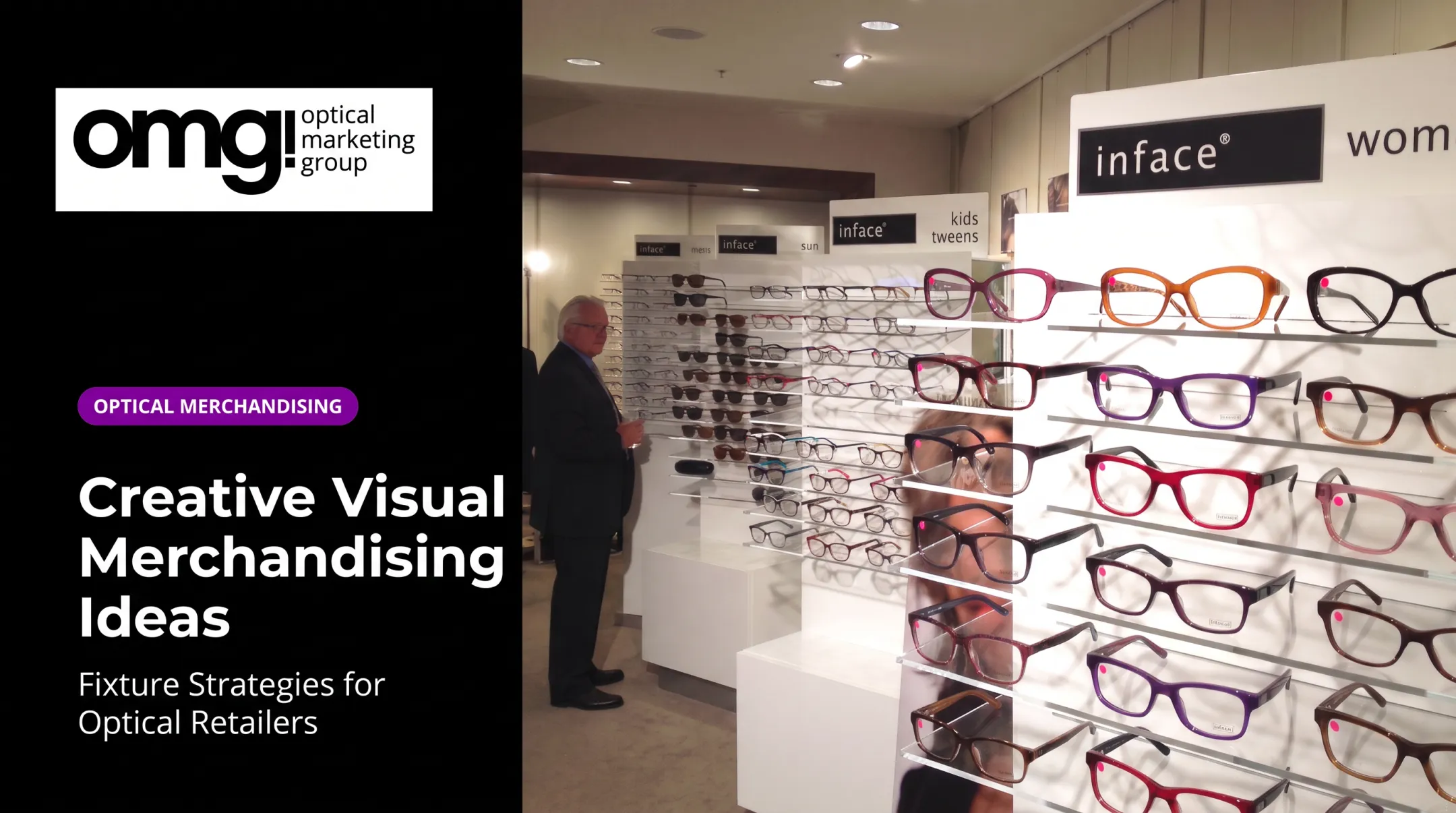
A quick note on fixtures: tiered, stepped platforms like OMG! Lil' House design or a three-tier Tree Stand already do the "elevate and separate" work these concepts call for, so you're not building risers from scratch every November.
Design Principles for a Strong Christmas Optical Display
Concept ideas only work if the execution respects a few non-negotiable principles. Here's what separates a window that sells from one that just decorates.
Start With One Theme, Not a Christmas Catalog
"Christmas decoration" is too broad to design around. A winter fashion edit, a nostalgic toy shop, a snowy village, or an elegant holiday soirée gives every prop and frame choice a clear reason to be there or not.
Build a Clear Focal Point
Every window needs a hero: one frame, one product group, one oversized ornament, one message. Supporting pieces should reinforce that focal point, not pull attention away from it. If everything competes for attention, nothing wins.
Use Color, Contrast, and Lighting On Purpose
Lighting isn't one-size-fits-all. Daytime storefront light and nighttime illumination behave differently, and a cooler setting that matches daylight may need to shift warmer after dark. For frame-specific lighting, 20/20's eyewear merchandising feature recommends LEDs in the 3,000 to 3,500 Kelvin range, lit from above onto the frame fronts.
A few practical notes:
- White or off-white backgrounds make most frame colors pop
- Rimless frames are the exception: they can disappear against white, so use a darker backdrop instead
- Watch for glare and reflections directly on the glass, especially with shiny props near spotlights
Balance Props With Product Visibility
Risers, hanging elements, and varied heights create visual interest, but frames still need to sit at a readable eye level. Keep snow effects, tinsel, and oversized ornaments out of the direct sightline to the product. Negative space is a design choice, not wasted space.
Design for How People Actually See the Window
Walk across the street and look at your display from both directions, during the day and after dark. Most passersby catch your window at a glance, often from a car, so scale graphics and signage accordingly. Keep your entrance, accessible path, and staff sightlines clear.
How to Plan and Install a Christmas Window Display
A great concept falls apart without a plan. Treat this like any other retail project: define, audit, sketch, build, maintain.
Define the Objective First
Decide what this window needs to do: sell a frame collection, promote gifts, drive appointments, or simply build brand awareness during a high-traffic season. Match that objective to one clear, measurable call to action before you sketch anything.
Audit Your Window and Inventory
Document window dimensions, viewing angles, natural light, available outlets, and any landlord restrictions on signage or lighting. Then confirm the frames you want to feature are actually in stock and easy for staff to locate when a customer asks.
Sketch a Simple Layout
Map out the backdrop, hero product, secondary pieces, props, lighting, and signage before committing to anything custom-built. Test the arrangement with temporary materials first. It's a lot cheaper to move a cardboard mockup than a finished fixture.
Plan for Installation and Maintenance
Build in the unglamorous parts:
- Secure mounts and surface-appropriate adhesives
- Cable management for lighting and any digital elements
- Nonflammable or properly rated decorative materials
- Spare bulbs and a dusting or restocking schedule
If your display needs to remain accessible to customers and staff, keep circulation paths clear. The 2010 ADA Standards generally call for 36 inches of clear walking width along accessible routes, so don't let a prop table or extension cord eat into that space.

Know When to Bring in Design Support
Custom graphics, branded signage, fixture builds, or a full practice refresh are a different scale of project than a DIY window. This is where a studio like OMG! Optical Marketing Group fits in, offering integrated design, graphics, merchandising, production, and installation support for eyecare practices that want more than a weekend project.
Layer In Digital Signage, If You Use It
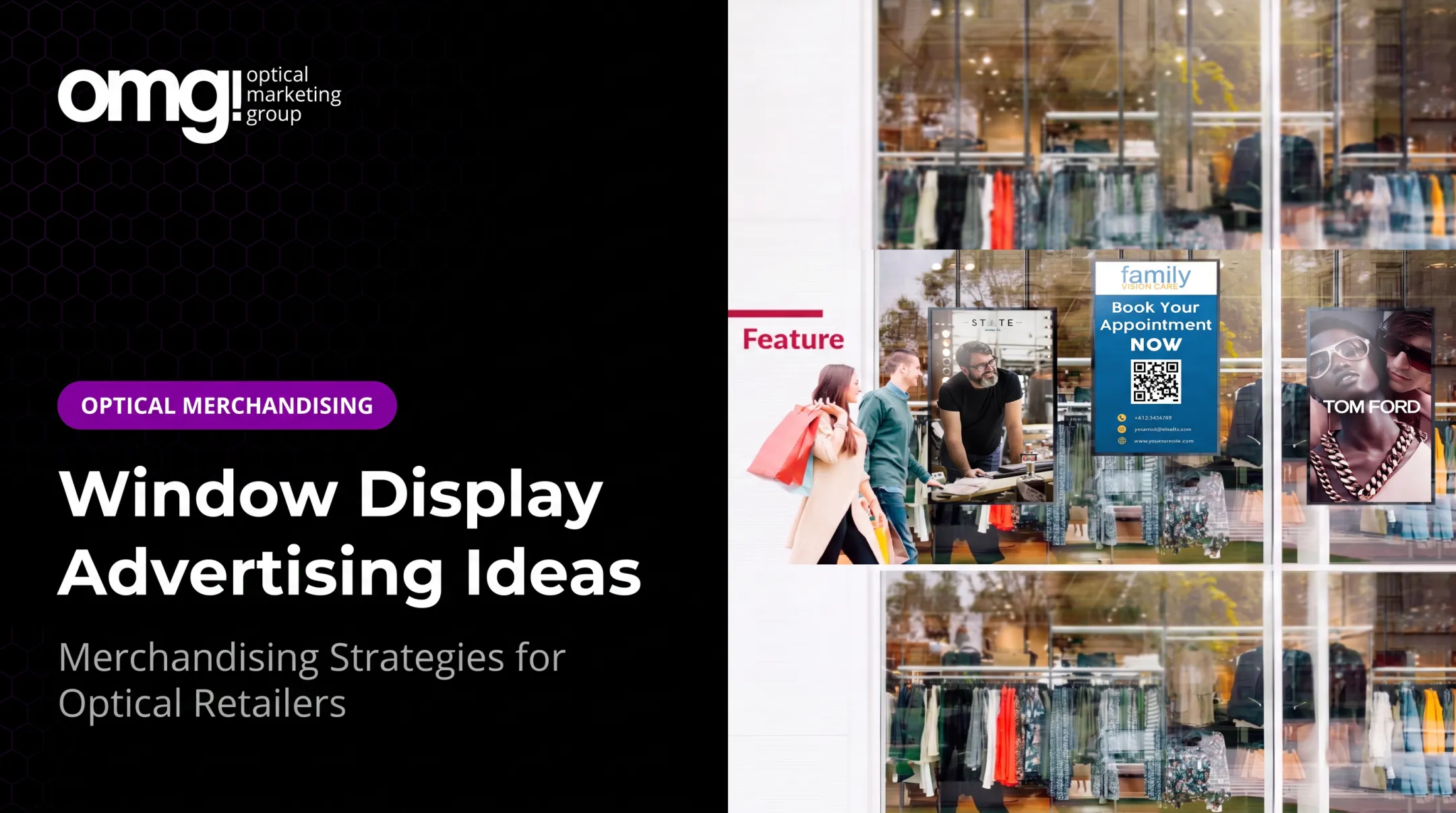
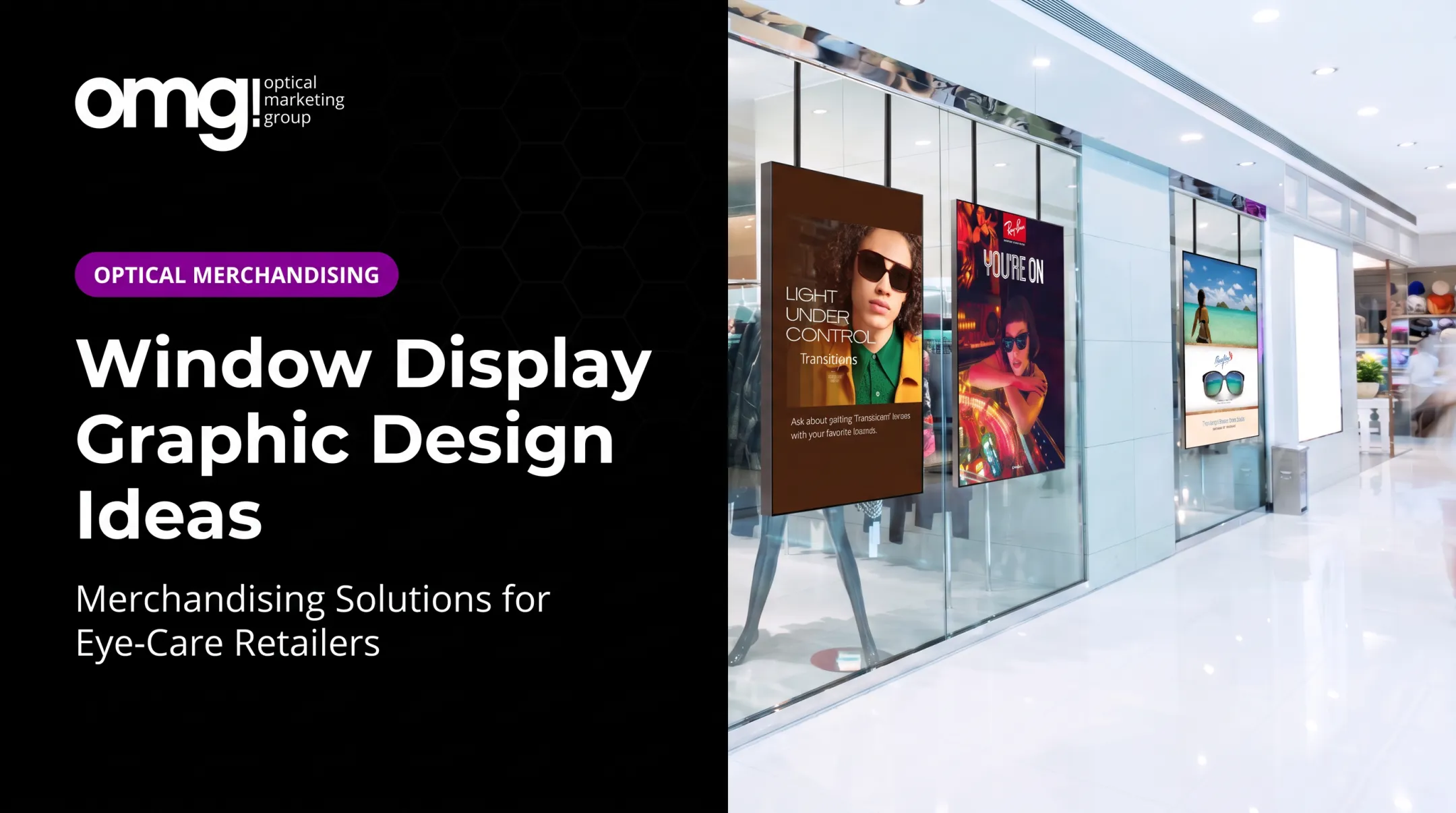
Rotating holiday messages or short frame videos on a window-facing screen can add motion and freshness without overwhelming the physical display. Products like a window projection system or an HD window-facing screen are built for daylight visibility, but check current specs and subscription details before you publish anything live.
Turn the Christmas Window Into an Optical Merchandising Opportunity
A beautiful window that doesn't lead anywhere is just decoration. Connect it to something.
Mirror the display inside. Repeat the same colors, featured frames, and message at an interior display near the entrance, so the thing that caught someone's eye outside is easy to find the moment they walk in.
Give people a next step. Simple, honest calls to action work best:
- "Find your festive frame"
- "Explore gift-ready eyewear"
- "Ask about holiday appointments"
- "Scan to view the seasonal edit"
Only promise discounts or availability your practice has actually confirmed.
Brief your staff. A two-minute rundown on the featured frame story, related accessories, and the desired customer action means every team member can pick up the conversation a window display starts. Encourage staff to simply ask, "Did you see our window?"
Track what moves. Compare featured-frame inquiries, sell-through, appointment requests, QR scans, and walk-ins during the display period against a baseline from a slower month. Skip the guaranteed-results promises; just watch the numbers and adjust.

Common Christmas Window Display Mistakes to Avoid
A few recurring mistakes undercut otherwise strong holiday windows:
- Overcrowding the glass with too many frame styles, colors, or competing messages. If an element doesn't support your one story, cut it.
- Letting props hide the product. Tinsel, snow effects, and oversized ornaments in front of frames defeat the purpose of the display.
- Leaving outdated elements up too long. Swap out damaged or past-date decor promptly and have a winter or new-year display ready to go.
- Skipping safety checks. Confirm electrical connections, secure mounting, and fire-rated materials before the display opens to the public, and keep accessible routes clear.
- Decorating without a destination. A window with no product, message, or next step gives people a nice photo opportunity and nothing else.
Frequently Asked Questions
How do I make a Christmas window display?
Pick your audience and theme, choose one focal frame or collection, settle on a limited color palette, then layer in props and lighting that support rather than hide the product. Test it from the sidewalk before finalizing, and set a simple maintenance plan.
What should I put in a Christmas window display?
A hero frame or collection, seasonal props that reinforce your theme, branded signage, lighting that highlights the product after dark, and a clear call to action suited to what your practice is actually offering.
How can an optical store make its Christmas window display stand out?
Commit to a specific story instead of generic decoration, build one strong focal point, use a controlled color palette, and present frames creatively rather than lining them up. Visibility after dark matters just as much as daytime appeal.
What are good Christmas window display ideas for a small shop?
Lean minimalist: one hero frame on a riser, vertical fixtures that use height instead of floor space, a tight monochromatic palette, and a single well-placed QR code or small screen instead of a crowded scene.
How often should I change a Christmas window display?
Refresh it whenever your campaign, inventory, or promotion changes, and check it regularly between updates for dust, burnt-out bulbs, glare, or frames that have sold out.
How can I measure whether my window display is working?
Track featured-frame inquiries, sales of displayed products, appointment requests, QR scans, social mentions, and staff observations against a baseline period. It won't give you a guaranteed number, but it will show you a trend.